
- home
- Tokens & Medals
- U.S. Medals
- U.S. Mint Washington Centenary Medal 1904--Member of Friendship Fire Co. 40mm
- Back to:
- U.S. Medals


U.S. Mint Washington Centenary Medal 1904--Member of Friendship Fire Co. 40mm
| Qty | Wire/Check | Bitcoin | CC/Paypal |
| Any | $149.00 | $150.49 | $154.96 |
The U.S. Mint Washington Centenary Medal 1904—Member of Friendship Fire Company 40mm is an exceptional example of early twentieth-century American medallic art, combining national commemoration with local civic pride. Struck by the United States Mint in Philadelphia, this 40-millimeter bronze medal was issued in 1904 to honor the centenary of an event associated with George Washington, often tied to the broader wave of national centennial celebrations that commemorated various milestones in the life and legacy of the first president. The particular version inscribed “Member of Friendship Fire Co.” represents a personalized or organizationally distributed piece, linking America’s founding hero to one of the earliest volunteer fire companies in the nation. Friendship Fire Companies were common across the mid-Atlantic and northeastern states in the nineteenth and early twentieth centuries, many tracing their origins to colonial times. The medal’s dual identity—as a national historical token and as a local badge of affiliation—makes it both historically significant and highly collectible.
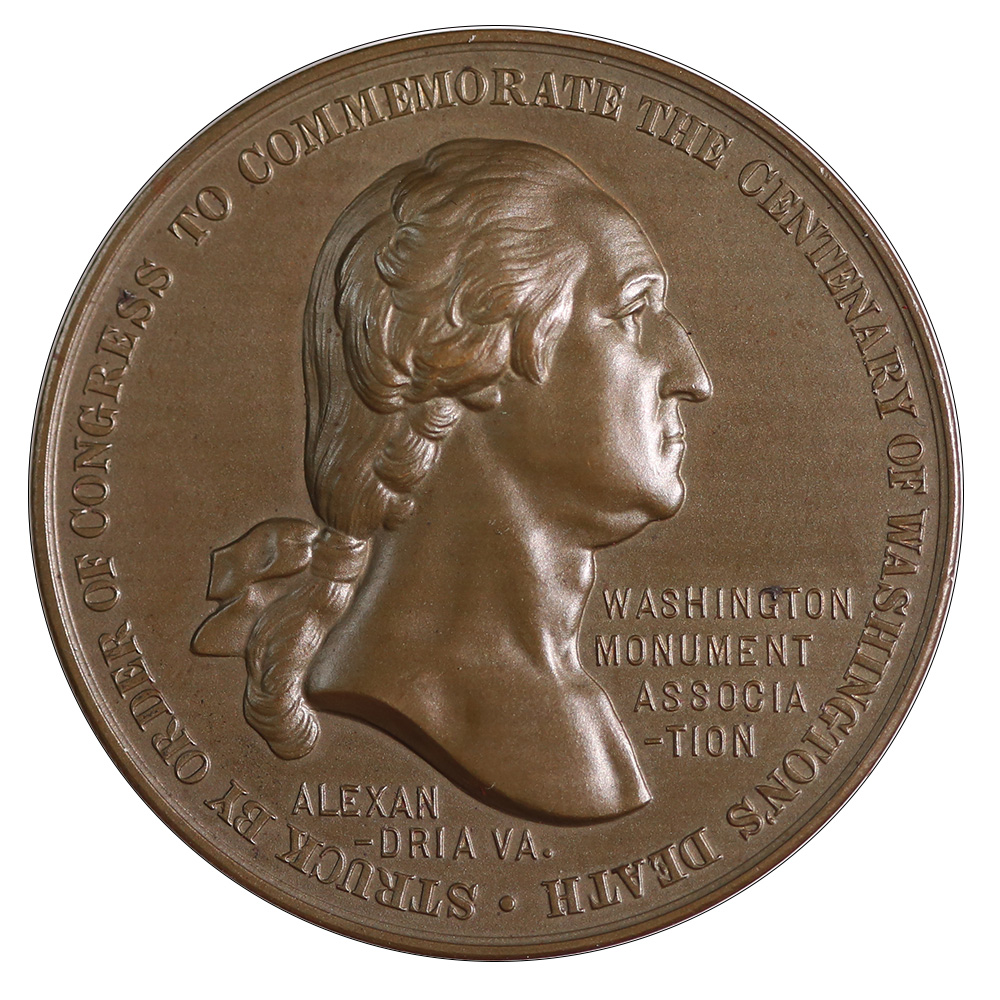
The obverse design of the 1904 Washington Centenary Medal presents a dignified and classical portrayal of George Washington, rendered in profile facing left. The portrait is modeled on traditional neoclassical depictions of Washington used on U.S. Mint medals of the era, such as those influenced by Jean-Antoine Houdon’s famous bust. Washington’s hair is tied with a ribbon in the 18th-century style, and his expression is resolute, symbolizing leadership and virtue. Surrounding the portrait are inscriptions commemorating the centenary theme, often reading “WASHINGTON CENTENARY 1904,” though some varieties may feature shortened legends depending on the issuing organization. The design reflects the formal engraving style of the U.S. Mint during the early 1900s, characterized by fine detail, balanced composition, and clean lettering. The edge and fields of the obverse are smooth and well-polished, emphasizing the three-dimensional quality of Washington’s likeness.
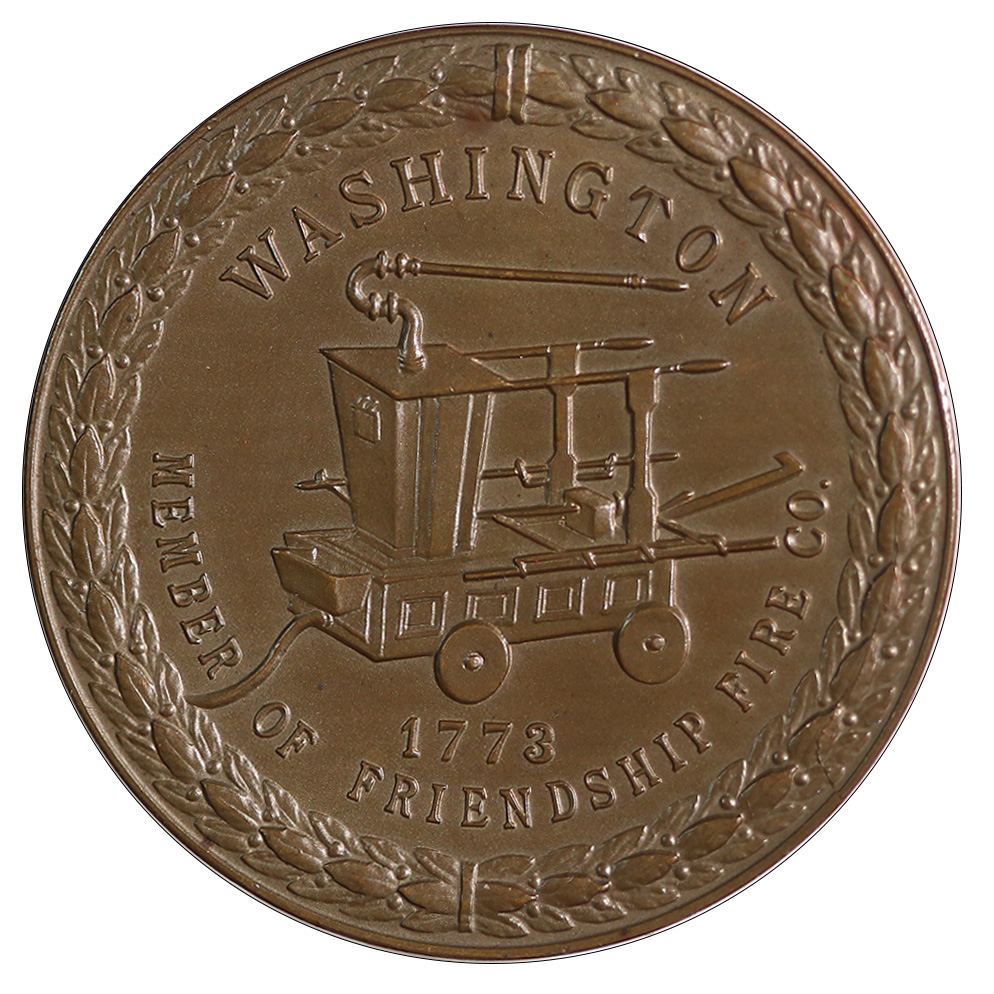
The reverse of the medal carries the personalization that makes this specific piece unique: the inscription “MEMBER OF FRIENDSHIP FIRE CO.” appears prominently, typically engraved or struck within a wreath or decorative frame. This customization identifies the medal as an honorary or commemorative issue presented to members of the Friendship Fire Company, one of the earliest and most respected volunteer firefighting organizations in the United States. Founded in colonial times—Philadelphia’s Friendship Fire Company dates to the mid-1700s—these volunteer brigades represented the spirit of civic duty and public service that paralleled the ideals of the early republic. The reverse design may also include ornamental motifs such as crossed fire axes, laurel branches, or a small medallion space for engraving the recipient’s name, depending on the variant. This fusion of national and community iconography underscores the sense of unity and shared purpose between patriotic and local institutions at the turn of the century.
The 1904 Washington Centenary Medal was struck by the U.S. Mint during a period of expanding medallic production for both governmental and private commissions. The Philadelphia Mint was the primary producer of official medals and tokens for civic organizations, fairs, and commemorations, employing master engravers who ensured every detail met the same standards applied to coinage. The medal’s 40mm diameter provided ample space for a rich and balanced design, with deeply engraved features that captured light and shadow effectively. The medal was typically struck in bronze, chosen for its durability and pleasing golden-brown tone that ages gracefully over time. Some examples may have been silvered or gilt-plated for special presentation purposes, though the standard composition remains bronze. The sharpness of detail, uniform rim thickness, and precise lettering indicate a Mint-quality strike rather than a private reproduction, and each medal was likely produced using hand-operated presses to maintain full relief definition.
The creation of the Washington Centenary Medal coincided with a broader national trend of issuing medals to commemorate anniversaries of events tied to George Washington’s life or his influence on American institutions. The year 1904 marked several overlapping centennial observances, including celebrations of Washington’s contributions to the founding of civic organizations and public institutions. For the Friendship Fire Company, adopting a Washington commemorative medal would have symbolized the alignment of their values—duty, courage, and service—with the virtues embodied by the first president. The practice of awarding or distributing medals to members of civic organizations was common during this era, serving both as a badge of honor and as a tangible connection to America’s historical narrative.
The mintage of the 1904 U.S. Mint Washington Centenary Medal for the Friendship Fire Company was limited, as these were not general-issue commemoratives but organizational pieces. Such medals were typically produced in small batches, sufficient to present to active or honorary members of the company. Surviving examples today are relatively scarce, particularly those retaining sharp detail and original surfaces. Many were handled as keepsakes or worn during parades and anniversary events, resulting in varying degrees of wear. The rarity of the “Member of Friendship Fire Co.” inscription adds considerable collector appeal, as it distinguishes this variant from more common uninscribed or general Washington commemorative issues of the same era.
In terms of condition, examples of this medal in well-preserved state exhibit attractive medium to dark bronze patina, with highlights of reddish or golden undertones on the highest points. The prooflike fields and crisp relief of Washington’s portrait reflect the fine quality of Mint craftsmanship. Light toning or minor handling marks are typical for pieces over a century old, though well-stored examples may retain much of their original luster. The engraved or impressed “Member of Friendship Fire Co.” inscription on the reverse should remain fully legible, often with subtle depth differences depending on the method of application. Medals preserved in original presentation boxes or with period documentation carry additional historical and collectible value.
Historically, the Friendship Fire Company played an essential role in American community life, and owning such a medal would have been a point of pride for members. Volunteer fire companies were among the earliest organized civic institutions in colonial and early republican America, often associated with prominent local figures. By the early 1900s, when this medal was issued, they had become respected social and charitable organizations. The association of Washington’s image with the company’s name reinforced the shared virtues of leadership, public service, and unity that both represented. The medal thus functions as both a commemorative artifact and a piece of organizational history, linking its holder to a lineage of civic dedication dating back to the founding of the republic.
Today, the 1904 U.S. Mint Washington Centenary Medal—Member of Friendship Fire Company, 40mm—stands as a valuable and evocative relic of early American commemorative medal production. It reflects a time when local organizations embraced national symbols to express identity and honor, and when the U.S. Mint’s artistry extended beyond coinage into the creation of enduring works of civic pride. Collectors prize it for its dual significance as a Washington medal and a piece of firefighting history. With its classical portraiture, distinguished provenance, and deep connection to community and nation, this medal endures as a tangible testament to American heritage and craftsmanship at the dawn of the twentieth century.


