
- home
- Cents
- Lincoln Cents
- Uncirculated and Proof Lincoln Cent Rolls
- Uncirculated Lincoln Cent Roll 1962-D

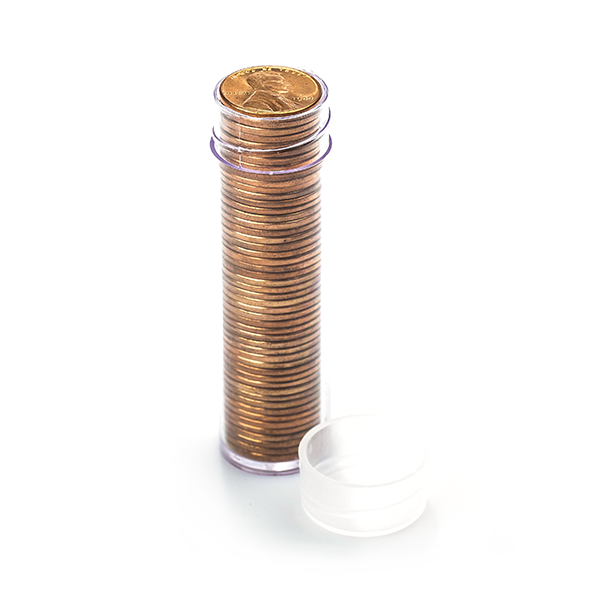
Uncirculated Lincoln Cent Roll 1962-D
| Qty | Wire/Check | Bitcoin | CC/Paypal |
| Any | $4.95 | $5.00 | $5.15 |
The Uncirculated Lincoln Cent Roll 1962-D represents a preserved and complete grouping of coins from a stable and mature period in United States coinage, when the Lincoln Memorial reverse design had become firmly established and widely recognized. The Lincoln cent, first introduced in 1909 to commemorate the 100th anniversary of Abraham Lincoln’s birth, had already become one of the most enduring and recognizable coins in American history by the early 1960s. The transition from the Wheat reverse to the Lincoln Memorial design in 1959 marked a major shift in the series, and by 1962 this updated design had been fully integrated into everyday commerce. A full uncirculated roll of 1962-D Lincoln cents captures this moment in pristine condition, offering collectors a uniform and untouched group of coins that reflect the production standards and design continuity of the Denver Mint during a period of economic strength and national confidence.
The historical context of the 1962-D Lincoln cent is rooted in a time of continued economic growth and modernization in the United States. The early 1960s were characterized by a booming post-war economy, expanding suburban communities, and increasing consumer activity, all of which created a strong demand for circulating coinage. The Denver Mint, identified by the “D” mintmark on these coins, played a vital role in supplying coins to the western United States, producing large quantities to meet the needs of a growing population. In 1962, the combined output of the Philadelphia and Denver Mints reached into the hundreds of millions, reflecting the scale of economic activity during this period. These coins circulated widely and became an integral part of daily transactions, used by Americans in every aspect of life, from small purchases to routine financial exchanges. The 1962-D issue thus represents both the efficiency of the U.S. Mint and the economic vitality of the era.
The design of the 1962-D Lincoln cent maintains the iconic pairing of Victor David Brenner’s obverse portrait and Frank Gasparro’s Lincoln Memorial reverse. The obverse features a right-facing image of Abraham Lincoln, accompanied by the inscriptions “IN GOD WE TRUST” above, “LIBERTY” to the left, and the date “1962” with the “D” mintmark to the right. This design had remained largely unchanged since its introduction, providing continuity and a strong sense of identity for the series. The reverse depicts the Lincoln Memorial in Washington, D.C., rendered with fine architectural detail. Under magnification, the seated statue of Lincoln can be seen within the structure, adding a subtle yet impressive level of intricacy. The inscriptions “UNITED STATES OF AMERICA” and “E PLURIBUS UNUM” appear above the memorial, while the denomination “ONE CENT” is displayed below. The design reflects a blend of tradition and national symbolism, honoring Lincoln’s legacy while showcasing an important American landmark.
The 1962-D Lincoln cents were struck in a bronze composition consisting of 95% copper and 5% tin and zinc, which was standard for Lincoln cents prior to the composition change in 1982. Each coin measures approximately 19 millimeters in diameter and weighs 3.11 grams, making it small yet durable for everyday use. The mintage for the Denver issue was substantial, with hundreds of millions of coins produced to meet the demands of the expanding economy. A full roll typically contains 50 coins, all preserved together and set aside before entering circulation, maintaining their original mint state condition. The coins in an uncirculated roll often display a range of colors, from bright red to red-brown or brown, depending on storage conditions and natural oxidation over time. Fully red examples are especially desirable among collectors, as they retain the vibrant appearance of freshly struck copper coins. The consistency of composition and size across the roll reflects the precision of modern minting techniques.
An uncirculated roll of 1962-D Lincoln cents provides collectors with an opportunity to examine coins in their original mint state condition, free from the wear associated with circulation. Each coin should exhibit full detail, with sharp features on Lincoln’s portrait and crisp lines on the Lincoln Memorial. The surfaces typically display original mint luster, which may appear as a bright, reflective sheen or a softer satin finish depending on the strike and storage conditions. Minor contact marks may be present due to the coins being stored together in a roll, but these are generally minimal and do not significantly detract from the overall quality. The uniformity of condition across the roll enhances its appeal, as it represents a consistent group of coins preserved since the time of minting. Collectors often appreciate the ability to study multiple examples within a single roll, observing subtle variations in strike and luster.
The significance of the Uncirculated Lincoln Cent Roll 1962-D extends beyond its individual coins, as it captures a well-established period in the Lincoln cent series when the Lincoln Memorial design had become a permanent fixture of U.S. coinage. The roll offers insight into the minting process and the quality of production during the early 1960s, providing collectors with a preserved sample of coins from this era. The coins also reflect the broader themes of economic growth and national stability, as the United States continued to expand and modernize. For collectors, the roll represents both historical and numismatic value, serving as a tangible link to a time when the nation was entering a new decade of progress and change.
The condition of an uncirculated roll further enhances its desirability, as it preserves the coins in a state that closely reflects their original appearance at the time of minting. Many rolls are still housed in paper wrappers, which may be original or from early distribution, adding to their authenticity and appeal. Over time, the wrapper itself may show signs of aging, but this often contributes to the historical character of the item. Collectors value these rolls not only for their preservation but also for the potential to find high-grade examples suitable for certification. The combination of historical context, iconic design, high mintage, and preserved condition makes the 1962-D Lincoln cent roll a compelling addition to any collection, offering both aesthetic enjoyment and a meaningful connection to a significant period in American numismatic history.


