
- Back to:
- Ancient Roman Coins


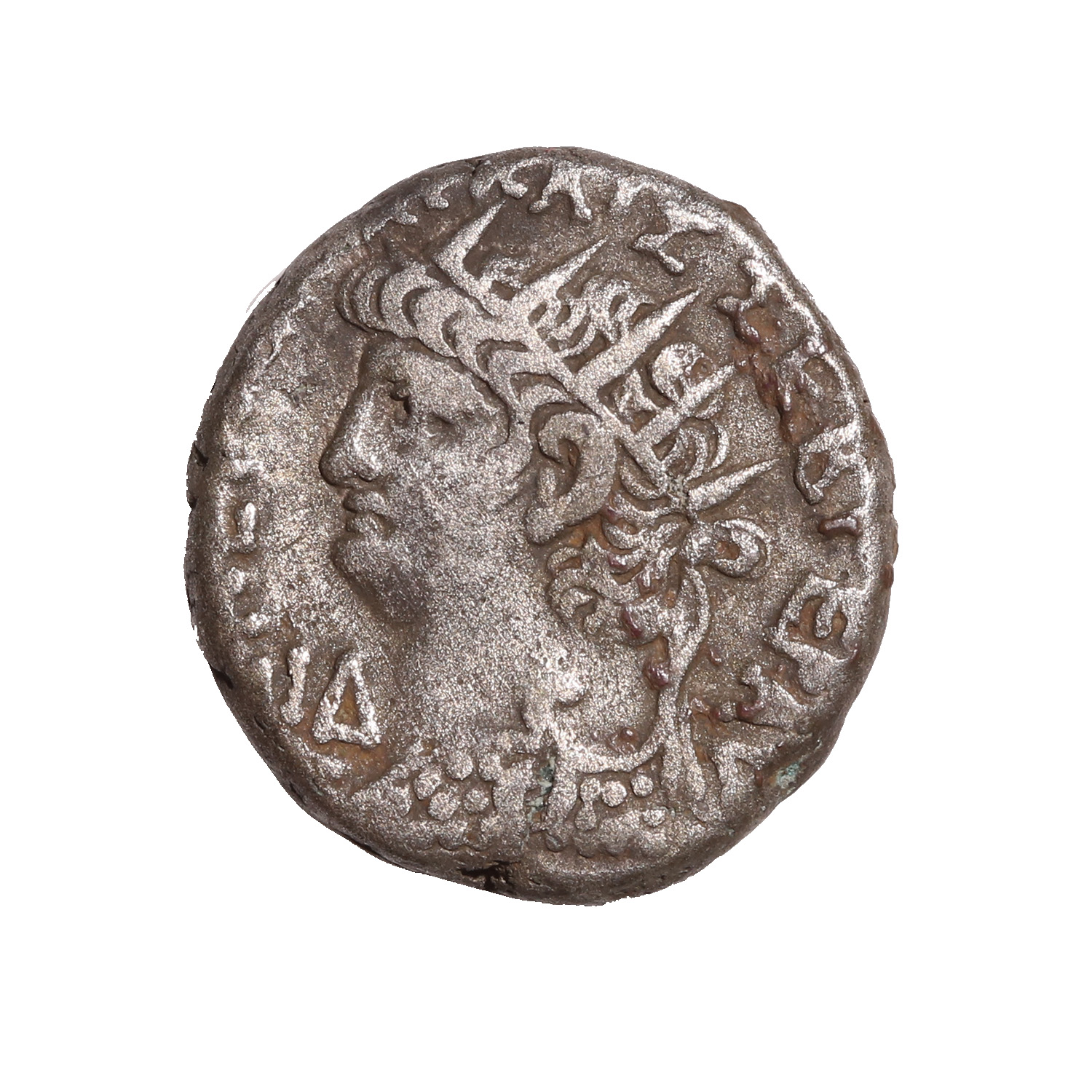
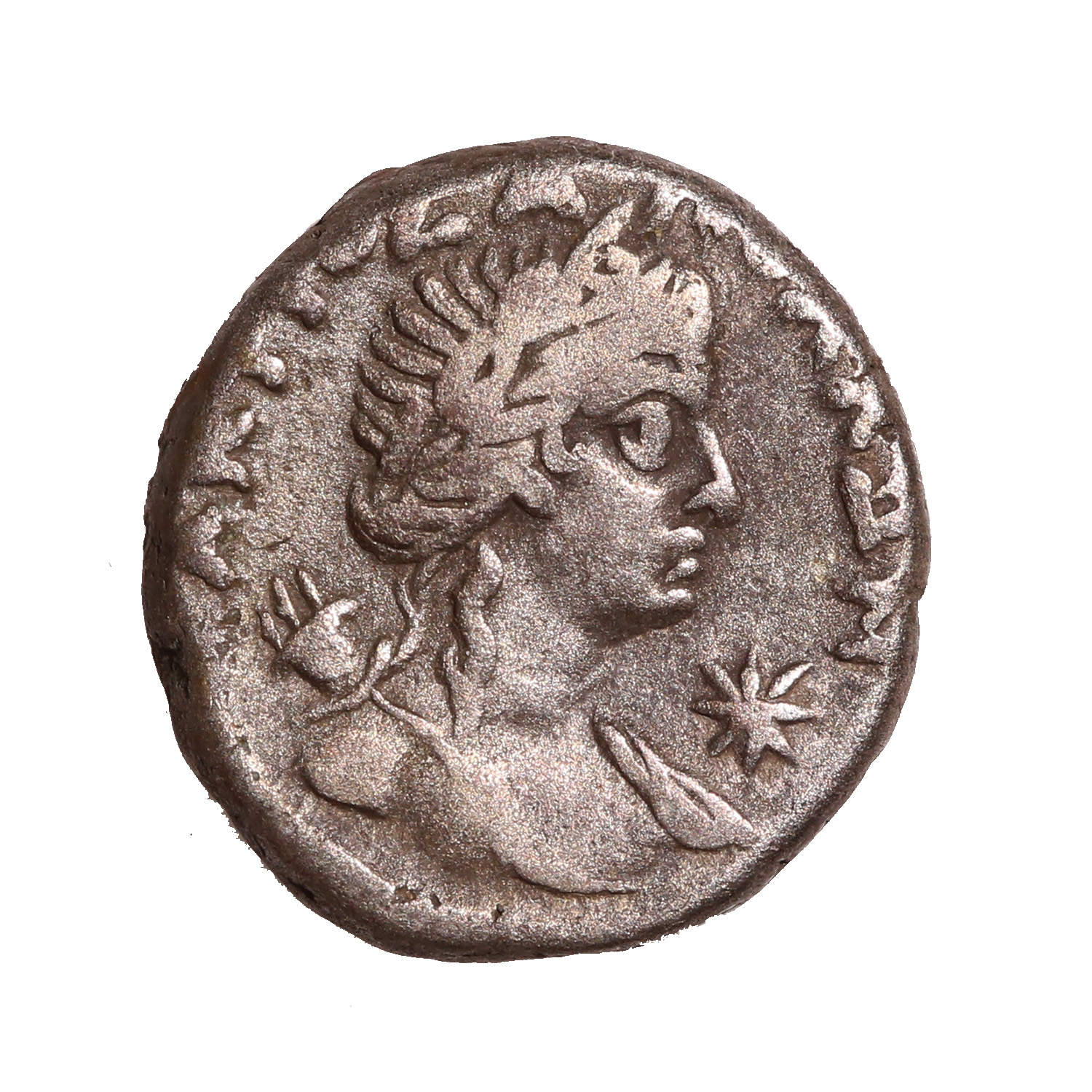
Roman Provincial Alexandria BI Tetradrachm 67-68 A.D. Nero ChVF
| Qty | Wire/Check | Bitcoin | CC/Paypal |
| Any | $395.00 | $398.95 | $410.80 |
The Roman Provincial Alexandria BI Tetradrachm of Nero, struck between 67 and 68 A.D., is a remarkable coin that reflects both the grandeur of the Roman Empire and the distinctive traditions of Egypt under Roman rule. Issued during the final years of Emperor Nero’s turbulent reign, this billon tetradrachm was produced at the mint of Alexandria, Egypt’s ancient capital and one of the most important provincial mints of the Empire. The Alexandrian mint operated under unique authority, issuing coins distinct from the imperial denarii and aurei circulating elsewhere. These coins, made from a copper-silver alloy known as billon, served primarily for local commerce and bore bilingual and symbolic designs tailored to the cultural landscape of Egypt. The Nero tetradrachm thus stands at the intersection of Roman political power and Egyptian artistic heritage, offering an invaluable glimpse into the complexities of provincial administration during one of Rome’s most infamous emperors.
The obverse of the coin features a portrait of Emperor Nero facing right, crowned with a radiate or laureate wreath depending on the issue. Nero’s image is rendered in high relief, emphasizing his full, rounded facial features, thick neck, and short, curling hair—traits characteristic of his later depictions. The portrait exudes imperial authority and self-assurance, attributes carefully cultivated through Rome’s propaganda machine. Unlike the idealized portraits of earlier emperors, Nero’s likeness often displays realistic and even exaggerated traits, reflecting both the evolving Roman portraiture style and the emperor’s own vanity. Around the portrait runs a Greek legend identifying him as “ΝΕΡΩΝ ΚΑΙΣΑΡ ΣΕΒΑΣΤΟΣ ΓΕΡΜΑΝΙΚΟΣ,” which translates to “Nero Caesar Augustus Germanicus.” The use of Greek, the lingua franca of the eastern Mediterranean, symbolizes the cultural adaptation of Roman rule within the Hellenized provinces.
The reverse of this Alexandrian tetradrachm typically depicts an Egyptian deity or a symbol drawn from local religious iconography, emphasizing Egypt’s spiritual identity within the Roman framework. Common reverses for Nero’s tetradrachms include depictions of Alexandria personified as a female figure with an elephant headdress, the bust of Serapis, or representations of Nilus, the river god reclining with a cornucopia. Some issues feature the eagle of Zeus standing on a thunderbolt, a symbol that combined Greek and Egyptian religious motifs. This blending of imagery demonstrates the Roman strategy of cultural integration, where local deities were respected and even incorporated into the imperial pantheon. The reverse inscriptions often include regnal dates based on the Alexandrian calendar, providing precise chronological data. For Nero, these coins are usually dated to years 13 and 14 of his reign, corresponding to 66/67 and 67/68 A.D., the final years before his downfall.
The mint of Alexandria was one of the most sophisticated in the Roman world, tracing its lineage back to the Ptolemaic era. It employed highly skilled engravers and die cutters who produced coins of considerable artistic merit. The billon tetradrachms of this period were struck using a copper base alloyed with varying amounts of silver, typically between 20% and 30%, giving the coins a pale silvery appearance when new. Over time, surface oxidation and wear often caused the copper content to dominate visually, leaving most surviving specimens with a gray or greenish tone. The large flan of the tetradrachm—approximately 24 to 27 millimeters in diameter—allowed for expansive designs, making these coins among the most visually impressive provincial issues. Each coin was struck by hand using hammered dies, with slight variations between strikes that allow modern scholars to identify die linkages and production sequences.
In terms of mintage, the Alexandrian mint produced a vast quantity of tetradrachms during Nero’s reign, as these coins formed the cornerstone of Egypt’s monetary system. Because the province was under direct imperial control rather than senatorial administration, its coinage remained isolated from the Roman imperial currency system. Egyptians were forbidden to use imperial denarii, ensuring that the local economy relied entirely on its own coinage. The tetradrachm, equivalent roughly to one Roman denarius in intrinsic value, circulated widely throughout the Nile Valley, facilitating trade, tax collection, and public payments. Despite high production, most examples were heavily circulated, and coins in well-preserved condition are considerably rarer. The mintage of Nero’s final Alexandrian issues declined sharply following the revolts of 68 A.D., which led to his suicide and the brief civil war known as the Year of the Four Emperors.
The condition of this particular specimen, graded as Choice Very Fine (ChVF), indicates a coin of superior preservation relative to most surviving examples. The portrait of Nero retains its full outline and much interior detail, with only moderate, even wear across the highest points of the hair and facial features. The laurel wreath or radiate crown is still visible, and the legend remains largely legible around the obverse border. On the reverse, the figure of the deity or symbolic motif is clearly defined, with the regnal year visible in the field. The surfaces exhibit a smooth, natural patina typical of ancient billon, blending soft gray and bronze tones. The coin shows excellent centering, with both portrait and reverse design fully contained within the flan—an important factor in determining desirability. The metal retains subtle traces of original silvering, testifying to its well-preserved composition after nearly two millennia of burial and handling.
Historically, this coin comes from one of the most dramatic periods in Roman history. Nero’s reign (54–68 A.D.) began with promise under the guidance of Seneca and Burrus but soon descended into tyranny and excess. He became infamous for his extravagant lifestyle, persecution of Christians, and the Great Fire of Rome in 64 A.D., after which he undertook massive reconstruction projects financed through debasement and heavy taxation. The Egyptian issues from his final years reflect both the wealth of the province and the need to maintain local stability amid growing unrest. Egypt remained the personal domain of the emperor, its grain shipments vital to feeding Rome. By continuing to issue coins featuring his image and local symbols, Nero reinforced his divine and political authority in a region essential to the empire’s survival. The date range of this tetradrachm—67 to 68 A.D.—marks the twilight of his rule, just before his forced suicide and the end of the Julio-Claudian dynasty.
The artistic and historical value of the Alexandrian tetradrachms extends beyond their monetary role. They are among the best-documented provincial coinages of the Roman Empire, providing insight into the interaction between imperial portraiture and local iconography. The juxtaposition of the emperor’s likeness with Egyptian religious imagery illustrates how Rome adapted its universal authority to regional contexts. For Egyptologists and numismatists alike, these coins are a bridge between classical and native traditions, recording in miniature the cultural dialogue that defined Roman Alexandria. The bilingual dating and inscriptions also offer a rare window into the administrative precision of the Alexandrian mint, which meticulously tracked each year of the emperor’s reign in the Greek calendar system.
From a collector’s standpoint, a Nero tetradrachm from Alexandria in Choice Very Fine condition represents a highly desirable piece of Roman provincial history. Its size, artistry, and bilingual design make it one of the most visually striking coins of the first century A.D. The combination of an imperial portrait, local deity, and precise regnal date encapsulates the political and cultural fusion that characterized Egypt under Roman rule. Each example is a tangible remnant of the vast, complex system that sustained the empire’s economy and projected its image to distant provinces. The survival of this coin, nearly untouched by the centuries, allows modern collectors to hold a direct link to the last days of Nero’s reign—a time of grandeur, decadence, and transition that forever altered the course of Roman history. As such, the Roman Provincial Alexandria BI Tetradrachm of 67–68 A.D. stands as both a numismatic treasure and a testament to the enduring artistry of the ancient world.


