
- Back to:
- Ancient Roman Coins


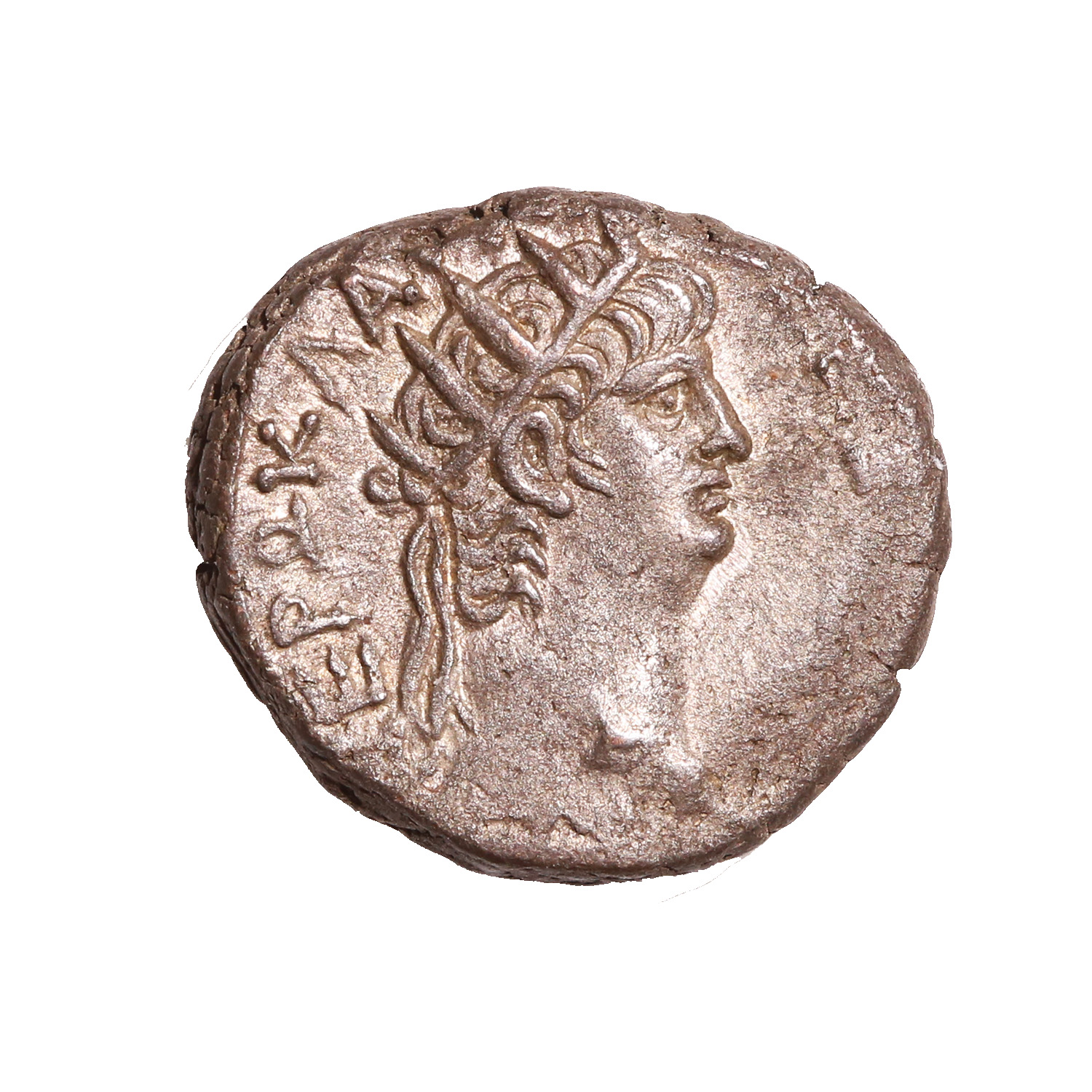
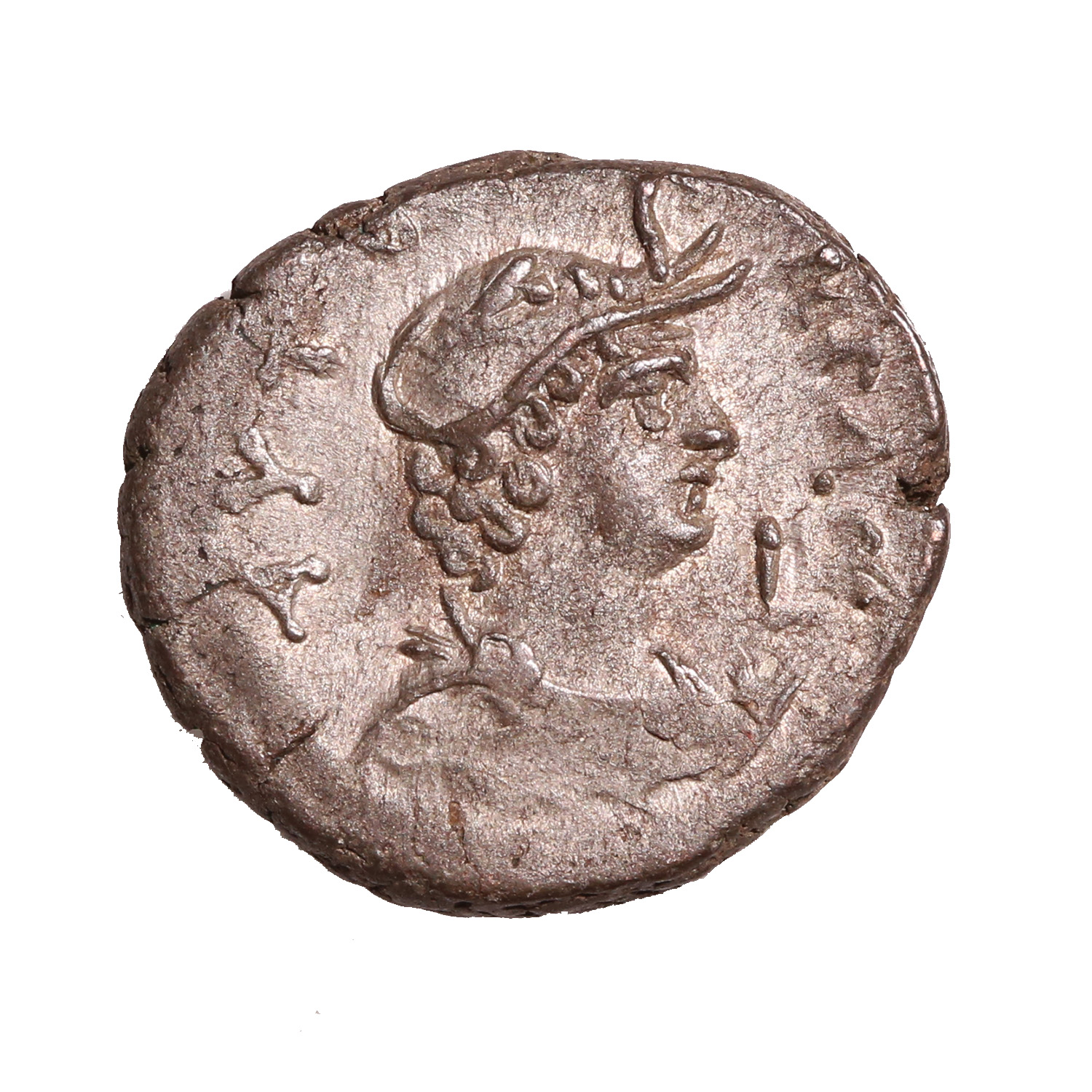
Roman Provincial Alexandria BI Tetradrachm 65-66 A.D. Nero ChXF
| Qty | Wire/Check | Bitcoin | CC/Paypal |
| Any | $495.00 | $499.95 | $514.80 |
The Roman Provincial Alexandria BI Tetradrachm of Nero, struck during 65–66 A.D., is a magnificent example of Egypt’s distinctive provincial coinage under Roman rule. This billon tetradrachm—struck from a silver-copper alloy—was produced at the Alexandria mint in the fourteenth regnal year of Emperor Nero, corresponding to an era of relative prosperity and artistic brilliance before the emperor’s final years of turmoil. Alexandria, the ancient capital of the Ptolemies and later a vital administrative center under Rome, issued its own coinage system separate from that of the rest of the empire. These provincial issues bore Greek legends and often combined Roman imperial imagery with Egyptian and Hellenistic motifs. The Nero tetradrachm from this period captures the cultural and political fusion of the time, reflecting both the imperial power of Rome and the enduring traditions of Egypt that had persisted since the age of the pharaohs.
The obverse of this tetradrachm presents a commanding portrait of Emperor Nero facing right, wearing a laurel wreath that signifies his triumphal and divine status. The portrait, rendered in remarkable high relief, depicts Nero in the mature phase of his reign—his features heavy and rounded, with full cheeks, a pronounced chin, and thick, curling hair. The artistry reflects the late Julio-Claudian style, where realism began to merge with idealism, portraying the emperor as both mortal ruler and divine sovereign. The Greek inscription surrounding the portrait reads “ΝΕΡΩΝ ΚΑΙΣΑΡ ΣΕΒΑΣΤΟΣ ΓΕΡΜΑΝΙΚΟΣ” (“Nero Caesar Augustus Germanicus”), affirming his imperial titles and his victories in Germania. The use of Greek rather than Latin underscores the linguistic character of the eastern provinces, where Greek remained the dominant language of administration, commerce, and culture under Roman governance. This obverse portrait exemplifies the technical mastery of the Alexandrian mint, whose engravers were among the most skilled in the ancient world.
The reverse of the coin typically features a symbolic figure drawn from Egypt’s rich religious and mythological tradition, emphasizing the unique cultural synthesis of Roman Alexandria. For Nero’s 65–66 A.D. issues, one of the most celebrated reverses shows the god Serapis, the Greco-Egyptian deity associated with healing, fertility, and the underworld. Serapis is portrayed draped and facing right or left, often with a modius (grain measure) atop his head, symbolizing abundance and divine order. This image was deeply rooted in Egyptian belief and had been fully embraced by the Greco-Roman population of Alexandria as a unifying symbol of faith and prosperity. Other reverse types from this year depict the eagle of Zeus standing on a thunderbolt—an emblem of imperial power and divine sanction. The inscriptions on the reverse include the regnal year in Greek numerals, usually written as “LΙΔ” (Year 14), corresponding to 65/66 A.D. in the Alexandrian calendar. These details not only allow precise dating but also demonstrate the mint’s administrative precision and adherence to local chronological systems.
The Alexandrian mint, established centuries earlier under the Ptolemies, continued to function as one of the most prolific and artistically refined mints in the Roman Empire. It operated under the direct authority of the emperor, as Egypt was considered his personal domain rather than a senatorial province. The coinage was struck from billon—an alloy of copper and silver—with silver content averaging between 20% and 25%. When freshly minted, the coins would have exhibited a bright, silvery sheen, though centuries of oxidation have usually given surviving examples a soft gray or olive tone. The coins were hand-struck using engraved dies, each individually crafted by master artisans, resulting in subtle variations across issues. Their broad flans and bold reliefs made Alexandrian tetradrachms ideal for showcasing both portraiture and symbolism. With diameters typically ranging from 23 to 27 millimeters and weights near 13 grams, these coins were the principal large-denomination currency used throughout Egypt during Roman times.
The mintage of Nero’s Alexandrian tetradrachms was extensive, as they served as the backbone of Egypt’s closed monetary system. Imperial denarii and aurei did not circulate within the province, ensuring economic isolation and administrative control over this vital region. The local coinage thus fulfilled all commercial, military, and governmental needs. Despite large-scale production, the survival rate of well-preserved examples is low, as most were heavily circulated for decades. The 65–66 A.D. issue is particularly significant as it marks one of the last stable years of Nero’s rule before the great revolts and conspiracies that culminated in his downfall. These coins may have been struck to finance imperial projects or to reaffirm Nero’s legitimacy following internal unrest in the empire. The widespread circulation of his portrait reinforced imperial presence in a land whose wealth—especially in grain—was essential to sustaining Rome itself.
The condition of this particular specimen, graded as Choice Extremely Fine (ChXF), marks it as a superb example of its type. The obverse portrait of Nero remains exceptionally sharp, with clear definition in the laurel wreath, hair curls, and facial features. The emperor’s eye, nose, and lips are crisp and unflattened, retaining much of the original engraving depth. The reverse design—whether depicting Serapis, the eagle, or another Alexandrian symbol—shows intricate detail, with the central figure fully struck and the regnal year clearly legible. The legends are complete and well-centered, demonstrating an even strike with minimal die wear. The surfaces exhibit a pleasing natural patina with subtle iridescent highlights under light, and traces of original silvering remain visible in protected areas. The rims are intact, with only faint evidence of circulation at the highest points, consistent with a coin that saw limited use before being stored or buried. Such preservation is highly desirable for a Nero tetradrachm, as most surviving examples show considerable wear from long local use.
Historically, this coin reflects a moment of grandeur and tension within Nero’s reign. By 65 A.D., Nero’s excesses had begun to alienate the Senate and the army. The Pisonian Conspiracy that year exposed widespread discontent among Rome’s elite, while economic pressures mounted across the empire. Despite these domestic troubles, Egypt remained a source of strength and stability for Nero, its administration largely loyal and its economy vital to Rome’s food supply. The Alexandrian issues of this period exude confidence and continuity, their elegant artistry suggesting that the imperial image remained carefully maintained abroad even as political chaos brewed at home. Within Egypt itself, the deities represented on the coins—Serapis, Isis, and Nilus—were not merely religious icons but also embodiments of fertility and cosmic balance, reassuring the populace of divine order under Roman rule.
The Alexandrian tetradrachms of Nero also hold immense numismatic importance for scholars. Their dated reverses provide fixed chronological anchors that help align imperial and provincial timelines. They reveal the evolution of Nero’s portraiture from youthful idealism to mature realism and offer insights into the stylistic preferences of provincial engravers. The billon alloy of these coins also provides valuable metallurgical data, helping modern researchers understand economic trends, silver sourcing, and minting technology in the early Roman Empire. Each surviving tetradrachm thus functions as both currency and document—a piece of material history that records not only the emperor’s visage but also the cultural and economic dynamics of Roman Egypt.
For collectors, the Roman Provincial Alexandria BI Tetradrachm of Nero, dated 65–66 A.D., represents a particularly desirable issue due to its fine preservation, historical context, and aesthetic excellence. In Choice Extremely Fine condition, the coin exemplifies the peak of Alexandrian artistry during the first century A.D., combining imperial grandeur with local tradition. Its bold portrait, precise inscriptions, and elegant reverse imagery make it a centerpiece in any collection of Roman provincial coinage. Beyond its beauty, it tells a story of empire and adaptation, of how Roman power and Egyptian heritage intertwined under the image of a controversial yet iconic ruler. This tetradrachm, shining with remnants of its ancient silver luster, remains a tangible relic of Nero’s Egypt—a province of immense wealth, artistic vitality, and enduring historical fascination.


