
- Back to:
- Ancient Roman Coins


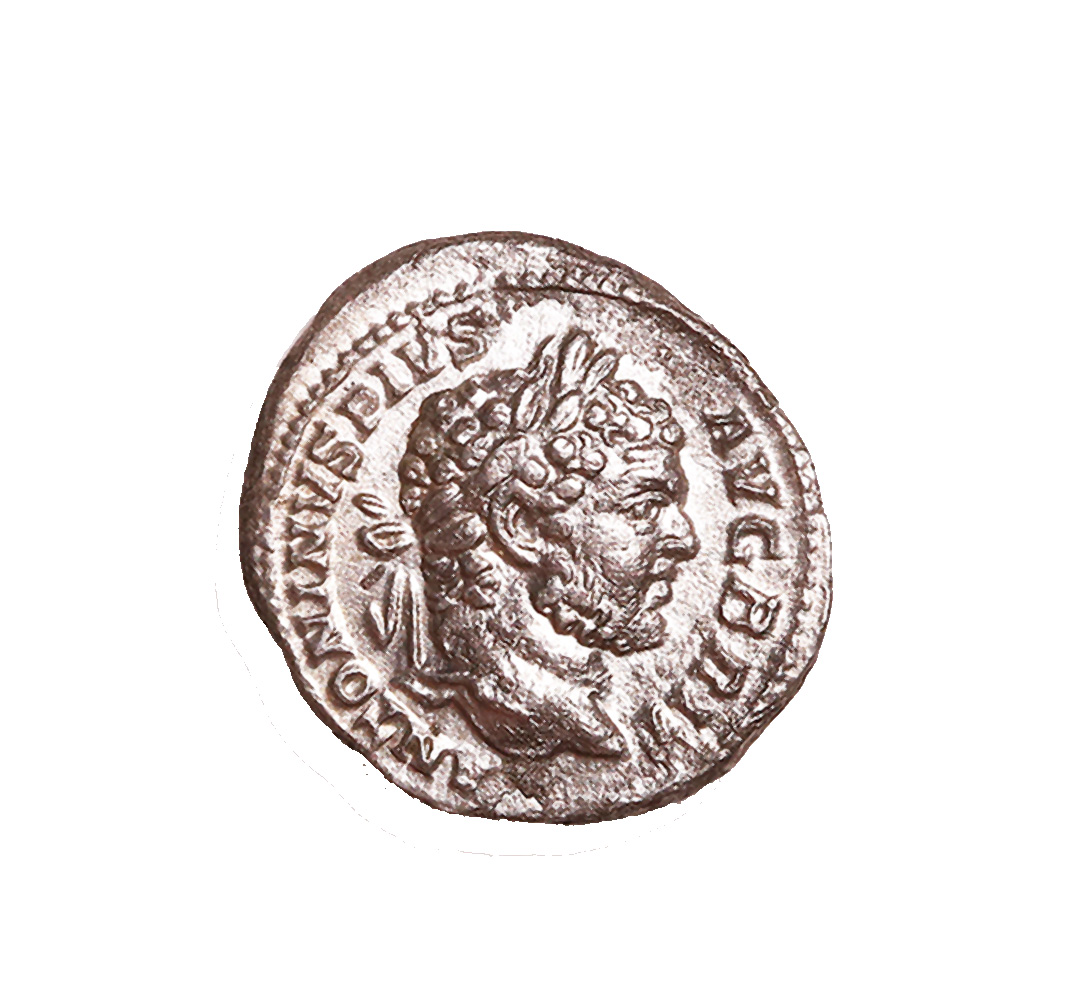
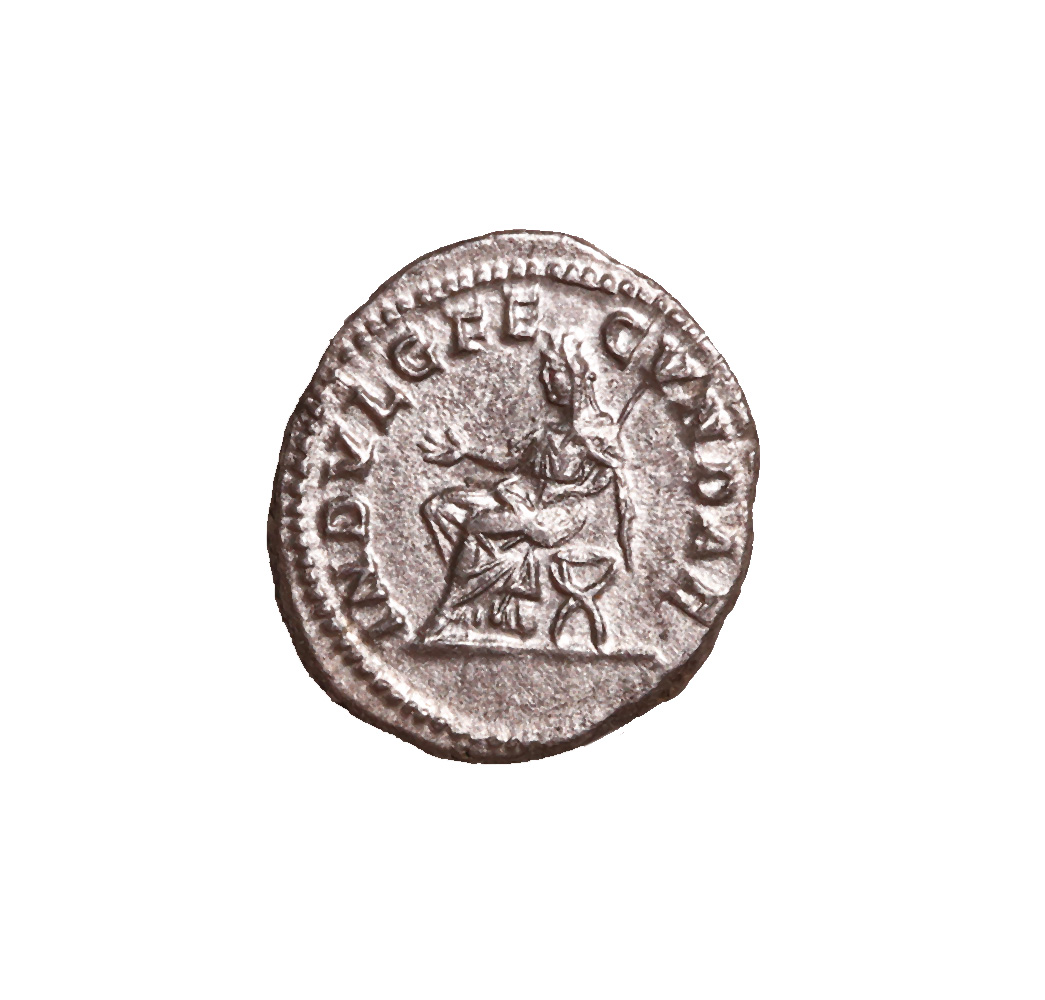
Roman Empire AR Denarius Caracalla 211 A.D. RIC-214 J. Domna AU
| Qty | Wire/Check | Bitcoin | CC/Paypal |
| Any | $295.00 | $297.95 | $306.80 |
The Roman Empire AR Denarius of Caracalla, struck in 211 A.D. and catalogued as RIC-214, is an extraordinary piece from one of the most complex and turbulent periods of the Severan dynasty. Minted at Rome, this silver denarius marks the joint reign of Caracalla and his mother, Julia Domna, following the death of Emperor Septimius Severus earlier that year. The coin’s artistry, historical context, and symbolic depth combine to make it one of the most compelling issues of early third-century Roman coinage. It commemorates both dynastic transition and imperial continuity, emphasizing Caracalla’s assumption of full imperial authority alongside the enduring influence of Julia Domna, who served as Augusta and political matriarch of the Severan court. Struck in high-quality silver, this denarius encapsulates the ideological message of stability and legitimacy that the young emperor sought to project at the dawn of his sole reign.
The obverse of the coin features a lifelike portrait of Caracalla facing right, laureate and draped, rendered with the realism characteristic of early third-century Roman portraiture. His expression is intense, stern, and resolute—a hallmark of Caracalla’s later numismatic depictions that sought to convey martial vigor and imperial authority. The engraver’s skill is evident in the sharply defined curls of the hair, the powerful jawline, and the slightly furrowed brow, all of which impart a sense of youthful determination. The inscription encircling the bust reads “ANTONINVS PIVS AVG BRIT,” which expands to “Antoninus Pius Augustus Britannicus,” reflecting his formal titles at the time. The title “Britannicus” commemorates the Severan family’s victory in Britain during the campaigns of 208–211 A.D., a triumph that marked the closing chapter of his father’s reign. The laureate crown symbolizes divine favor and victory, while the realism of the portrait underscores Caracalla’s self-styled image as a warrior-emperor in the mold of Alexander the Great, whose legacy he greatly admired.
The reverse of this denarius is particularly intriguing because it highlights the presence and influence of Julia Domna, Caracalla’s mother, in imperial propaganda. The type associated with RIC-214 commonly depicts the goddess Juno—identified here as Juno Domna—seated left, holding a patera (offering bowl) and scepter, with a peacock standing beside her, wings partly spread. The reverse legend reads “IVNO DOMNA,” directly linking the divine Juno to Julia Domna herself. This imagery serves a dual purpose: it venerates Juno, the protector of marriage and the female counterpart of Jupiter, while simultaneously elevating Julia Domna to quasi-divine status as the living embodiment of Juno on earth. The peacock, a sacred bird of Juno, symbolizes immortality, majesty, and the celestial nature of the empress’s virtues. Through this coin type, the mint effectively broadcast the message that Julia Domna remained the moral and spiritual anchor of the Severan dynasty, even as her sons Caracalla and Geta briefly shared power after their father’s death.
This denarius was struck at the Rome Mint, the central hub of imperial coinage and the standard-bearer of Roman artistic excellence. By 211 A.D., the Rome Mint had perfected the production of denarii, using carefully prepared silver blanks and finely engraved dies to achieve high-relief portraiture and crisp inscriptions. The coin’s silver content averaged 90–95%, maintaining the intrinsic integrity of the denarius despite the gradual debasement that would characterize later centuries. Each coin was struck by hand, producing subtle die variations that allow modern numismatists to trace production sequences. The precision of the strike and the balanced composition of both obverse and reverse reflect the craftsmanship of the mint workers, whose work under the Severans combined the classical realism of the Antonine period with a more vigorous and expressive artistic style. The denarius remained the cornerstone of Rome’s monetary system, widely used in commerce, military pay, and state distributions across the empire.
The mintage of Caracalla’s early 211 A.D. issues was substantial, as the new emperor sought to reinforce his legitimacy and reassure the empire’s population of dynastic continuity after Septimius Severus’s death at Eboracum (modern York, England). These coins circulated throughout the empire alongside joint issues with Geta, his younger brother and co-emperor, though tensions between the two soon escalated. The “IVNO DOMNA” reverse was particularly widespread and politically significant, reaffirming the Augusta’s revered role as the stabilizing figure in a time of uncertainty. Following Geta’s assassination later in 211 A.D., Caracalla’s coinage became even more centered on his singular authority, but this early issue captures the brief interlude of shared imperial presentation and the Severan ideal of familial piety and divine favor. The combination of Caracalla’s stern portrait and the maternal symbolism of Julia Domna made this coin a visual representation of both continuity and control—two essential themes in Severan statecraft.
The condition of this particular specimen, graded About Uncirculated (AU), places it among the finest surviving examples of the type. The obverse portrait of Caracalla retains sharp detail, with strong definition in the facial features, hair, and laurel wreath. The cheek and ear show only the faintest trace of friction, while the fields remain smooth and lustrous with a bright silver sheen. On the reverse, the seated figure of Juno is sharply rendered, with the folds of her drapery clearly delineated and the peacock beside her fully identifiable. The legends are bold and complete, evenly struck across the flan. The coin exhibits an attractive, natural toning—soft golden and pale gray highlights that accentuate the relief. The surfaces are clean, showing no evidence of harsh cleaning or corrosion, and the edges are intact, displaying the full circular integrity of the flan. In this condition, the coin perfectly preserves both the artistry and the ideological precision that defined Severan numismatics at its height.
Historically, this denarius captures a pivotal moment in Roman imperial politics. The year 211 A.D. marked the end of one era and the beginning of another: the passing of Septimius Severus, founder of the dynasty, and the uneasy co-rule of his sons Caracalla and Geta. Julia Domna, already revered as Augusta, became an indispensable political force, acting as mediator and regent between her sons. The coin’s reverse, with its direct reference to Juno Domna, was more than mere flattery—it was a deliberate assertion of her divine and stabilizing presence within the imperial household. As Caracalla sought to assert his sole dominance, this early coinage served as propaganda emphasizing familial unity, legitimacy, and divine favor. Within months, however, this illusion would collapse into violence when Caracalla murdered Geta, consolidating power but forever staining his reputation with fratricide. This denarius, therefore, stands as a poignant relic of that fleeting moment of harmony before absolute rule and tyranny took hold.
Economically, the AR denarius of Caracalla continued the Severan dynasty’s policy of maintaining a robust silver currency to sustain the military and administration. The extensive minting of denarii during this period ensured steady pay for the legions, who formed the foundation of Caracalla’s power. The coin’s consistent weight and metal quality reinforced confidence in Roman currency, which remained remarkably stable through the early third century. For the empire’s citizens, this denarius would have been a symbol of imperial continuity, its silver gleam and elegant designs reassuring them that order persisted even amid dynastic transition. Its widespread distribution also helped solidify Julia Domna’s reputation as Mater Castrorum (“Mother of the Camps”), a title reflecting her maternal role toward the Roman army—a sentiment mirrored in the nurturing imagery of the Juno Domna reverse.
From a numismatic perspective, the AR Denarius of Caracalla (RIC-214 “Juno Domna”) is one of the most historically and artistically significant issues of the early third century. It exemplifies the Severan blend of realism and ideology, combining the emperor’s fierce portrait with the serene divine imagery of his mother’s influence. Collectors and scholars alike value this type for its fine engraving, high silver quality, and rich historical resonance. In About Uncirculated condition, the coin retains nearly all of its original brilliance and sharpness, offering an unparalleled window into the artistry and political messaging of the Severan mint. It stands as a tangible link to one of Rome’s most dramatic familial sagas, a silver witness to the transition from the disciplined rule of Septimius Severus to the volatile and ambitious reign of his son. This denarius, radiating both power and poise, remains a lasting testament to the intersection of dynastic propaganda, maternal influence, and imperial might in the high Roman Empire.


