
- Back to:
- Ancient Roman Coins


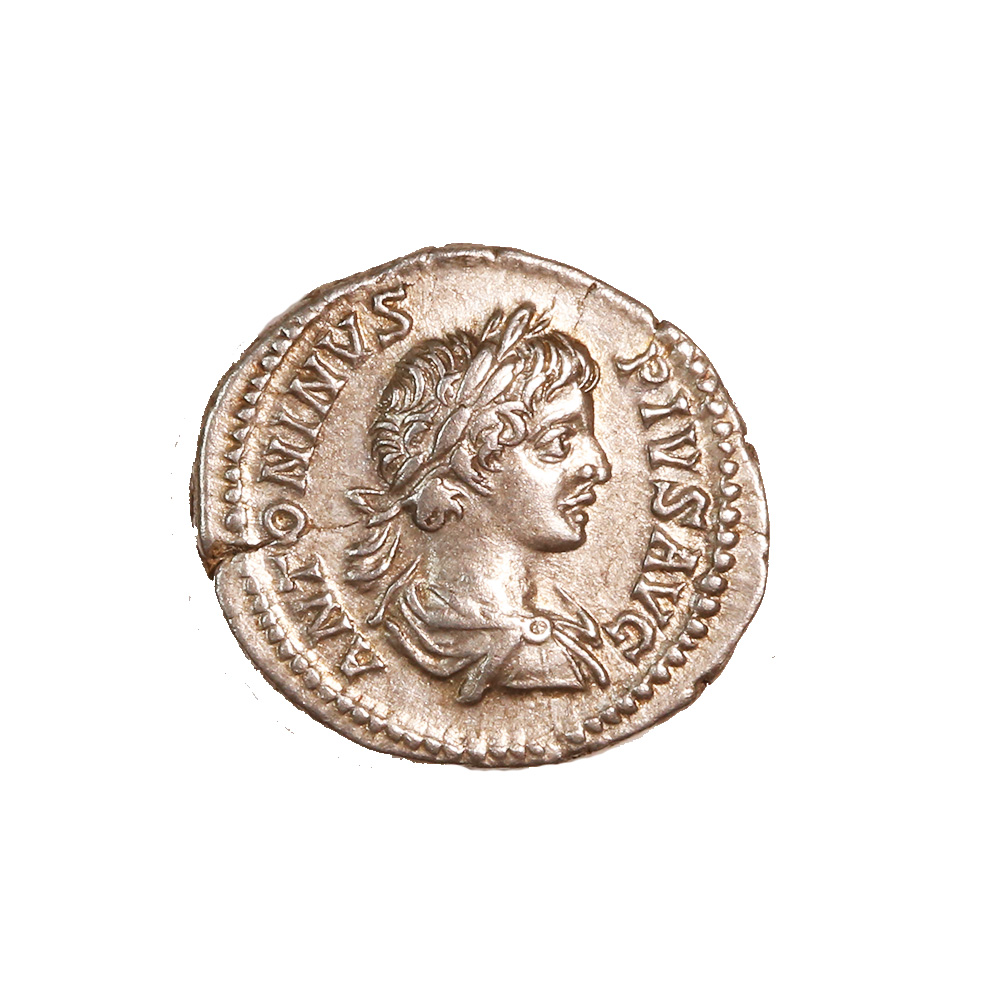
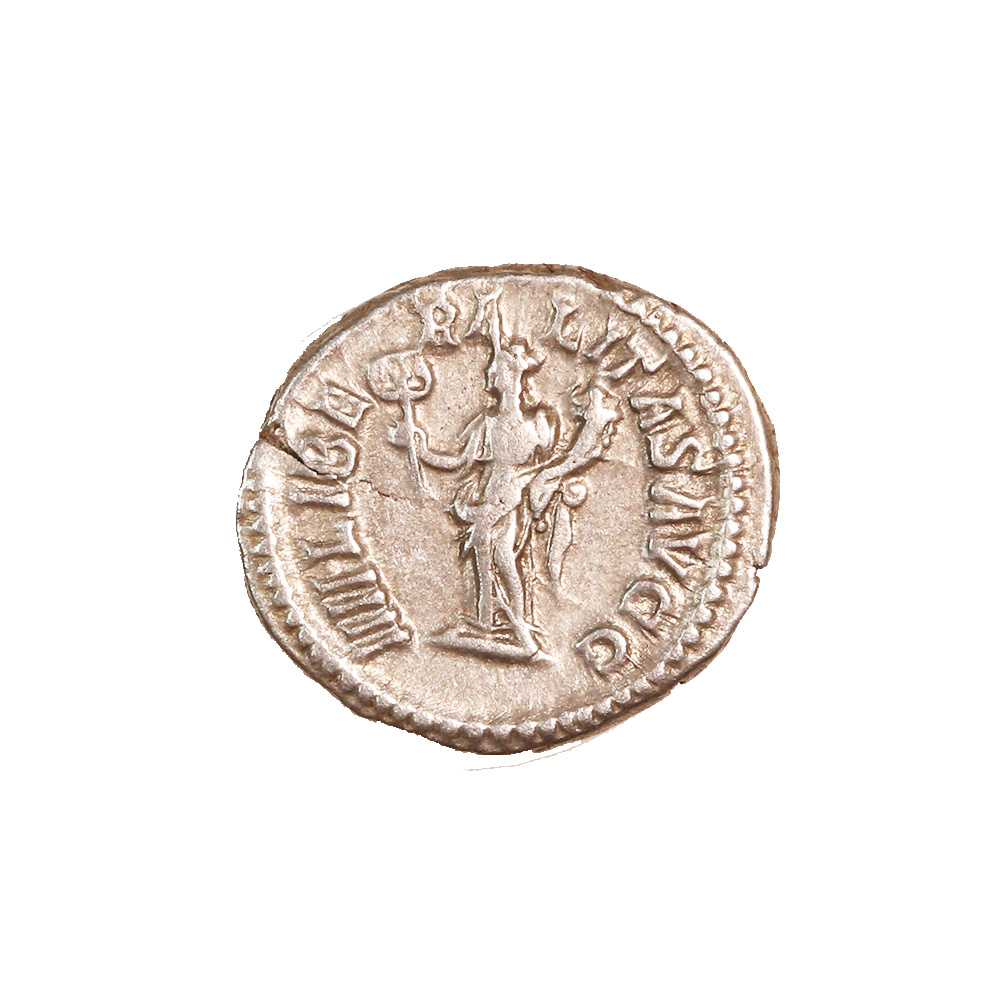
Roman Empire AR Denarius Caracalla 201-206 A.D. ChXF RIC135
| Qty | Wire/Check | Bitcoin | CC/Paypal |
| Any | $249.00 | $251.49 | $258.96 |
The Roman Empire AR Denarius of Caracalla, struck between 201 and 206 A.D. and catalogued as RIC 135, is an exceptional example of early 3rd-century Roman silver coinage. Issued during the joint reign of Emperor Septimius Severus and his son Caracalla, this coin captures the young Caesar’s transition from heir apparent to future ruler of one of history’s greatest empires. Struck in fine silver (AR – argentum), the denarius served as the principal silver denomination of Rome’s economy, widely circulated across its vast territories. The Caracalla denarii of this era reflect the Severan dynasty’s emphasis on legitimacy, dynastic continuity, and divine favor—key themes in the empire’s propaganda following years of civil strife. This particular specimen, graded Choice Extremely Fine (ChXF), preserves remarkable detail and luster, offering a vivid glimpse into both the artistry and authority of imperial Rome at the dawn of the third century.
The obverse of this denarius features a youthful, right-facing bust of Caracalla, draped and cuirassed, symbolizing his role as both prince and future general of the legions. The portrait is rendered with striking realism, showing the boy-emperor’s strong jawline, full cheeks, and short-cropped hair. Despite his youth, the engraver captured an air of determination and imperial bearing—an artistic foreshadowing of the ruthless and powerful ruler he would later become. The legend surrounding the portrait reads “ANTONINVS AVGVSTVS,” though in the early issues of this period it more typically appears as “ANTONINVS PIVS AVG,” denoting his official name Marcus Aurelius Antoninus, adopted to align himself with the respected Antonine dynasty. The precision of the lettering and the high relief of the portrait, even after centuries, exemplify the craftsmanship of Rome’s imperial mint at this time. In this Choice Extremely Fine example, the portrait remains crisp, with clear facial features and intact drapery folds, demonstrating the high level of preservation and fine strike typical of early Severan denarii.
The reverse of RIC 135 varies slightly across subtypes but typically features a standing deity or personification symbolizing stability and divine sanction for the young prince’s role in governance. One of the most recognized reverses for this issue depicts the god Mars, the Roman deity of war, standing facing forward, holding a spear and resting a shield at his side, with the legend “PONTIF TR P VIIII COS II.” This inscription indicates Caracalla’s official titles at the time: Pontifex (priest), Tribunicia Potestate (holder of tribunician power) for the ninth time, and Consul for the second time—dating the coin precisely to around 205–206 A.D. The choice of Mars is significant, symbolizing both military might and divine protection over Rome and its ruling family. This reverse design communicates the message that even in his youth, Caracalla embodied Roman virtus (valor) and pietas (duty)—virtues essential to sustaining imperial order. In this example, the reverse figure remains well-centered, with the spear and shield sharply struck and the legend nearly full and legible.
The coin was struck at the Rome Mint, the empire’s principal production center for silver and gold coinage, renowned for its refined artistry and consistent standards. The silver denarius of this period typically weighed around 3.3 grams and measured between 18 and 20 millimeters in diameter. The purity of the metal remained high, averaging approximately 80–90% fine silver, reflecting the relatively stable economic conditions during the height of Septimius Severus’s reign. The mint’s output under Severus and Caracalla maintained remarkable quality and precision, ensuring that coins like this one could circulate widely across the empire—from the legions on the Rhine frontier to the markets of Alexandria—without significant variation in weight or purity. The dies were hand-engraved, and slight stylistic variations in portraiture help numismatists trace specific die engravers and minting workshops, making each denarius a small piece of unique artistic history as well as a functional monetary instrument.
The mintage of Caracalla’s denarii from 201–206 A.D. was substantial, as the imperial government sought to reinforce his legitimacy as co-ruler with his father. These coins were distributed widely to the army, civic institutions, and provincial markets as part of broader propaganda efforts to secure loyalty and stability. The young Caracalla’s image was an ever-present reminder of dynastic continuity—the assurance that Rome’s leadership would pass smoothly from father to son. While many of these coins circulated heavily over the following decades, high-grade survivors such as this ChXF specimen are relatively scarce, particularly those with sharp detail, minimal wear, and natural silver toning. The sheer historical context of their issue—at a time when the Severan dynasty was consolidating control after decades of turmoil—gives each coin immense historical value beyond its artistry and metal content.
The condition of this particular specimen, graded Choice Extremely Fine (ChXF), reflects exceptional preservation. The obverse portrait retains nearly full detail, with clear definition in Caracalla’s facial features, diadem, and armor. The hair is finely delineated, and the drapery lines remain sharp, with only light wear visible on the highest points. The reverse figure of Mars (or corresponding deity, depending on variant) is fully outlined, with distinct folds in the garment, visible spearhead, and shield details intact. The legends on both sides are bold and complete, showing only minor softness in isolated letters. The silver surface exhibits a pleasing natural patina, with faint iridescent toning that enhances the depth of the design. The strike is well-centered, rims intact, and flan broad enough to accommodate the full design without clipping. These characteristics make it a superior example of early Severan silver coinage—both aesthetically appealing and historically representative of minting excellence during this pivotal period.
Historically, this denarius reflects the consolidation of power within the Severan dynasty, which had risen to prominence following the chaos of the Year of the Five Emperors (193 A.D.). Septimius Severus, eager to legitimize his rule, emphasized dynastic continuity by elevating his son Caracalla to the rank of Caesar in 196 and to Augustus in 198 A.D., when the young prince was only ten years old. By the time this coin was struck (c. 201–206 A.D.), Caracalla had already been recognized across the empire as co-emperor, appearing alongside his father on official coinage. The imagery of Mars and other deities reinforced the Severan commitment to military strength and divine favor—critical themes as Severus expanded the empire’s borders and solidified its armies’ loyalty. These coins, distributed among troops and provincial administrators, served both economic and ideological purposes, tying the image of the youthful Caracalla to Rome’s destiny and divine protection.
Artistically, the coin stands at the intersection of classical elegance and the emerging realism that would come to define 3rd-century Roman portraiture. The engravers of the Rome Mint were masters of subtle expression, capable of conveying youthful innocence alongside imperial authority. Caracalla’s denarii from this era are particularly prized for their fine style and balanced proportions, preceding the more severe and militaristic portraits of his later reign (211–217 A.D.). In many ways, the coin’s portrait captures a fleeting moment in Roman history—before the turbulence and autocracy of the later Severan period, when idealism still infused imperial imagery. This synthesis of artistic refinement and political message places the RIC 135 issue among the most compelling of early Severan denarii.
From a numismatic perspective, the Roman Empire AR Denarius of Caracalla (RIC 135, 201–206 A.D.) represents both an artistic and historical milestone in imperial coinage. In Choice Extremely Fine condition, it offers exceptional preservation of detail and surfaces, making it a standout specimen for collectors of Roman silver. Its balanced design—combining youthful portraiture with divine symbolism—encapsulates the Severan dynasty’s dual message of continuity and strength. Beyond its beauty and craftsmanship, this denarius carries the weight of history: struck during a period of consolidation and imperial confidence, yet before the turbulence that would follow. To hold such a coin is to connect directly with the world of ancient Rome—a civilization whose political ambitions, military might, and artistic excellence continue to inspire awe. The Caracalla denarius endures as both a miniature work of art and a timeless emblem of the empire at its height.


