
- home
- Ancient Coins
- Ancient Roman Coins
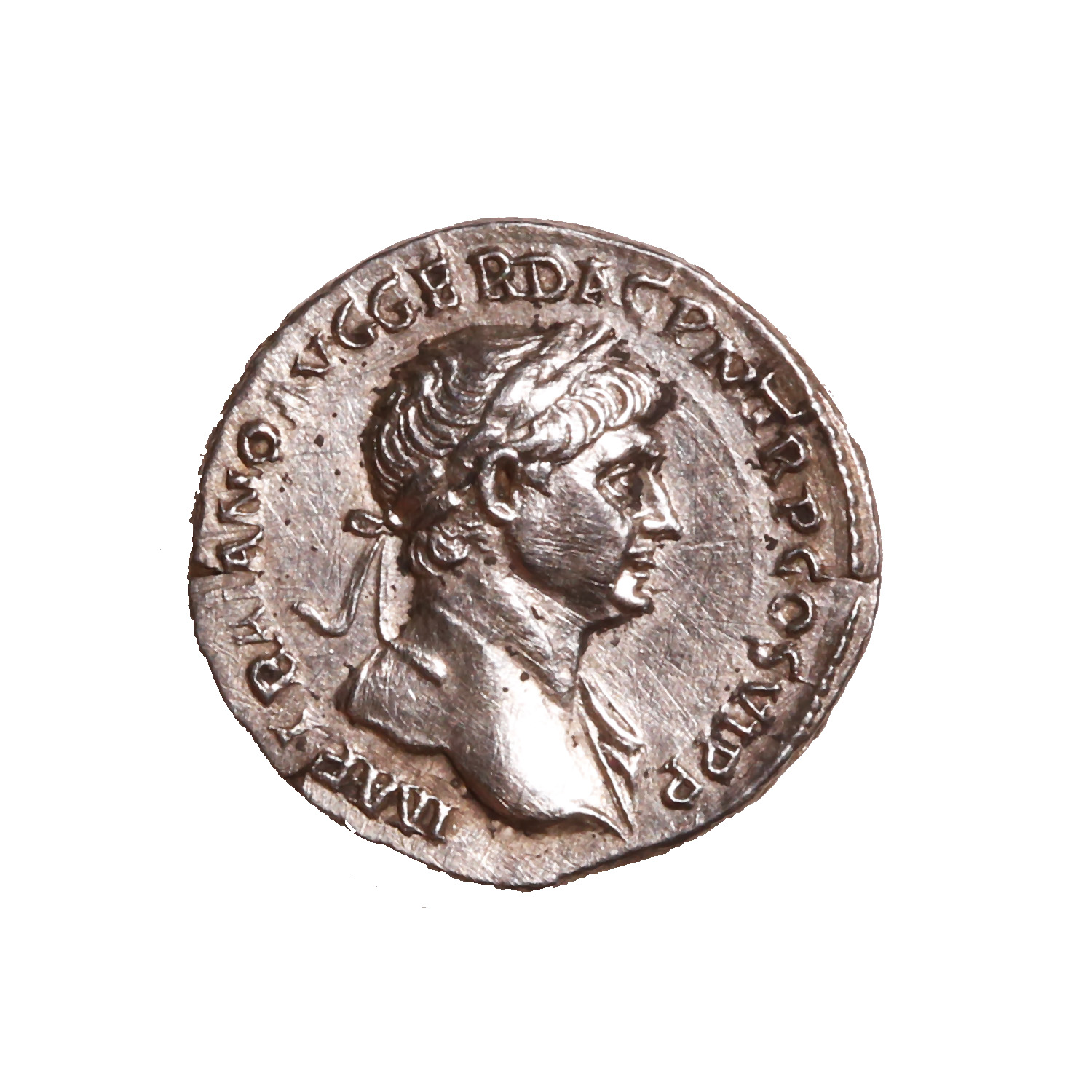
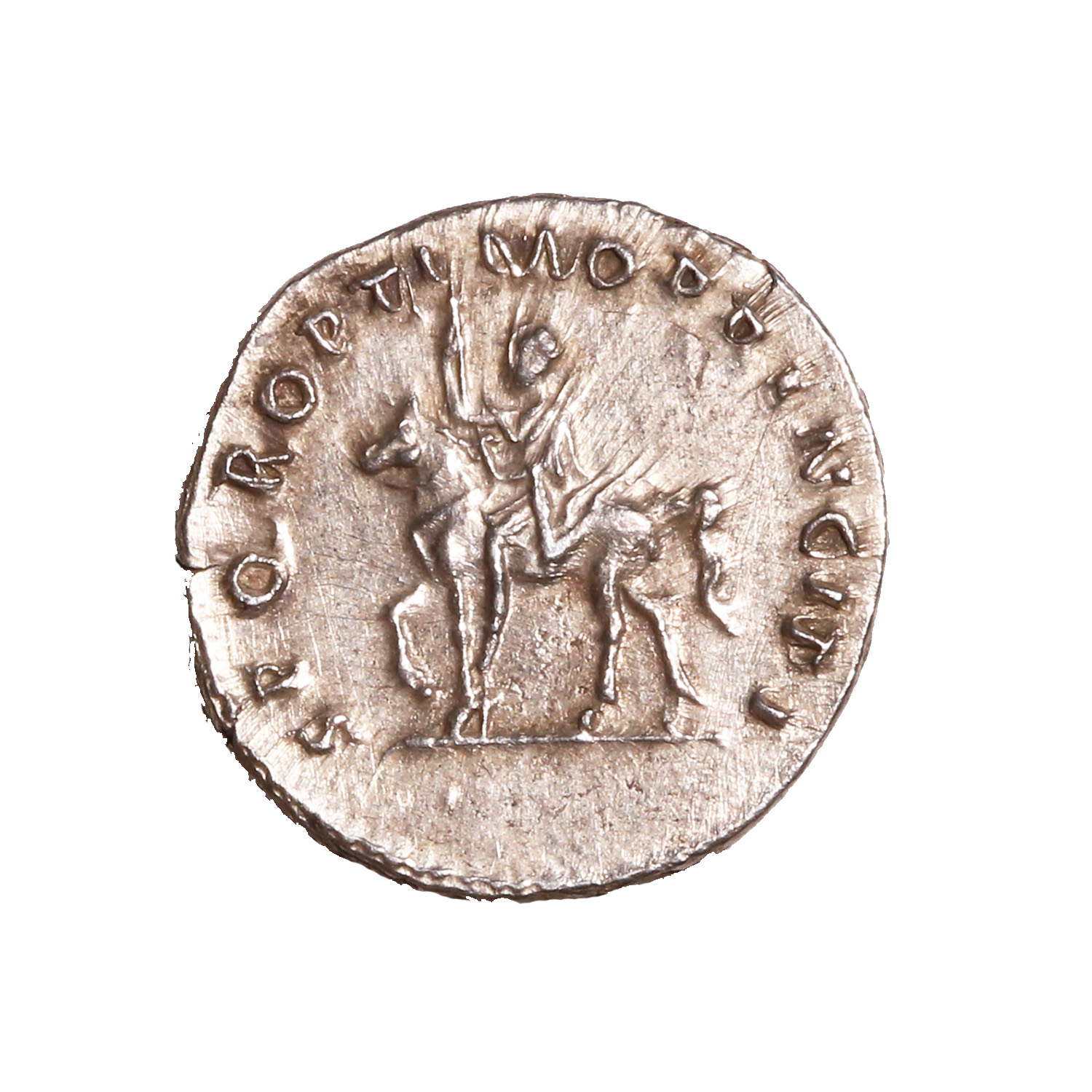
- Roman Empire AR Denarius Trajan 112-114 A.D. RIC-291 Trajan Horseback XF
- Back to:
- Ancient Roman Coins


Roman Empire AR Denarius Trajan 112-114 A.D. RIC-291 Trajan Horseback XF
| Qty | Wire/Check | Bitcoin | CC/Paypal |
| Any | $795.00 | $802.95 | $826.80 |
The Roman Empire AR Denarius of Emperor Trajan, struck between 112 and 114 A.D. and catalogued as RIC-291, is an extraordinary numismatic piece that captures the vigor, discipline, and military grandeur of Rome under one of its greatest rulers. Minted in high-quality silver at the Rome Mint, this coin portrays the emperor in a dynamic equestrian pose, known as the “Trajan on Horseback” type, a motif symbolizing imperial command and martial excellence. It was produced during the mature phase of Trajan’s reign, after his Dacian conquests and during preparations for the forthcoming Parthian campaign, when the empire was at the zenith of its territorial extent and prosperity. This denarius serves as both a commemoration of Trajan’s victories and a celebration of Rome’s might, embodying the ideals of virtus (valor), pietas (duty), and clementia (mercy) that defined the emperor’s leadership. Struck from nearly pure silver, it circulated throughout the vast expanse of the empire as a tangible reminder of Roman strength and unity.
The obverse of the denarius features a finely engraved bust of Emperor Trajan facing right, laureate and draped, projecting dignity and command. The portrait exhibits the distinctive realism characteristic of early second-century Roman portraiture, with Trajan’s strong jawline, high forehead, and short, neatly combed hair. His expression is resolute and confident, reflecting the persona of a seasoned commander and benevolent ruler. The legend encircling the bust reads “IMP TRAIANO AVG GER DAC P M TR P COS VI P P,” expanding to “Imperator Trajanus Augustus Germanicus Dacicus, Pontifex Maximus, Tribunicia Potestate, Consul Sextum, Pater Patriae.” These titles proclaim his authority, piety, and military victories in Germania and Dacia while underscoring his role as both emperor and father of the Roman people. The laurel crown adorning his head signifies divine favor and victory, a common attribute of emperors portrayed in their military prime. The obverse’s artistry and engraving quality represent the mature refinement of the Flavian and early Antonine minting traditions, balancing realism with idealized strength.
The reverse is one of the most dynamic designs of Trajan’s entire coinage series. It depicts the emperor mounted on a horse, galloping right, holding a spear or parazonium (a ceremonial short sword) in his right hand while raising his left arm, possibly in salute or command. The horse, shown in mid-stride, conveys a sense of motion and vitality rare in ancient numismatic art. This composition immortalizes Trajan as the archetype of the soldier-emperor, a leader who ruled from the front lines rather than from the palace. The reverse legend “COS VI P P SPQR OPTIMO PRINCIPI” translates to “Consul for the Sixth Time, Father of the Fatherland, The Senate and People of Rome to the Best of Princes.” The phrase “Optimo Principi,” meaning “Best of Princes,” was a title uniquely conferred upon Trajan by the Senate, acknowledging his exceptional virtues as both ruler and man. The depiction of the emperor on horseback reinforces his image as Rome’s victorious and just commander, embodying the ideals of leadership that later emperors aspired to emulate.
This denarius was struck at the Rome Mint, the empire’s preeminent center for silver coinage. By 112–114 A.D., the mint operated at peak efficiency, producing coins of consistent weight, high silver purity (generally 95–98%), and fine detail. Each piece was struck by hand using engraved dies, the obverse and reverse carefully aligned to ensure balanced imagery. The craftsmanship of the mint artisans is evident in the anatomical precision of both the horse and rider, as well as in the clarity of the inscriptions. The minting of this type likely coincided with preparations for Trajan’s Parthian campaign, which would extend Roman influence deep into Mesopotamia. The “horseback” type thus served as visual propaganda, celebrating the emperor’s martial readiness and foreshadowing new victories. The flans used for Trajanic denarii were typically broad and thin, allowing full display of the artistry—a hallmark of early second-century coinage design.
The mintage of this issue was significant, reflecting both the emperor’s desire to broadcast his military prowess and the economic vitality of the empire at this time. The conquest of Dacia a few years earlier had brought immense wealth to Rome through the acquisition of its gold and silver mines, replenishing the treasury and fueling large-scale minting activity. Coins like the RIC-291 denarius were distributed throughout the empire, serving in the pay of soldiers, in commerce, and in imperial benefactions. Despite their widespread circulation, few examples have survived in well-preserved condition due to extensive use in daily transactions. Those that retain sharp detail and attractive toning, such as this specimen, are highly coveted by collectors and scholars alike for their combination of artistry, symbolism, and historical depth. The reverse scene of Trajan on horseback is particularly admired as one of the most lifelike and heroic renderings of an emperor in Roman numismatics.
The condition of this example, graded Extremely Fine (XF), attests to its careful preservation and strong strike. The obverse portrait of Trajan retains full detail, with crisp lines in the laurel wreath, hair, and facial features. Minor wear is limited to the highest points of the cheek and neck, consistent with gentle circulation. The reverse image of the emperor on horseback remains sharply defined—the musculature of the horse, folds of the rider’s cloak, and weapon details are all distinct and easily visible. The legends on both sides are clear and complete, and the coin is well-centered, allowing every element of the design to appear in full. The silver surfaces exhibit a pleasing, even patina with traces of natural toning that enhance the coin’s depth and visual appeal. The fields are smooth, free from significant marks or cleaning, and the edges show no evidence of clipping. Such a high-quality example vividly conveys the original artistry of the engraver and the pride of Rome’s minting tradition during Trajan’s reign.
Historically, this coin reflects a period of unmatched confidence in Roman leadership and military might. Trajan’s rule (98–117 A.D.) marked the greatest territorial extent of the Roman Empire, stretching from Britain to Arabia and from the Atlantic to the Persian Gulf. By the time this denarius was struck, Trajan had already completed two successful Dacian campaigns, securing enormous wealth for the empire and solidifying his reputation as a conqueror. The “horseback” motif evokes his role as imperator—the supreme commander who personally led his legions into battle. It also symbolizes virtus, the Roman virtue of courage and excellence, which defined Trajan’s public image. The depiction likely alludes to triumphal parades or imperial reviews, where the emperor, mounted and in command, embodied the majesty and order of Rome itself. To citizens and soldiers alike, such imagery affirmed the emperor’s divine favor and the empire’s unassailable power.
From an economic standpoint, the AR denarius was the cornerstone of Rome’s monetary system, its silver purity and stability ensuring trust across the empire’s vast trade networks. Under Trajan’s administration, the consistent quality of silver coinage reinforced both fiscal confidence and imperial unity. The influx of Dacian bullion and the revenues from trade with the East provided the resources for public works, including Trajan’s Forum, the famous Column commemorating his victories, and an extensive system of roads and aqueducts. This coin, therefore, is more than a relic of military triumph; it represents the prosperity and infrastructure that defined the golden age of Roman imperial governance. Each denarius served as both a financial instrument and a statement of imperial ideology—a message of power struck in silver.
In the realm of numismatics, the AR Denarius RIC-291 “Trajan on Horseback” type stands among the most dramatic and celebrated designs of the early second century. It combines lifelike motion, symbolic power, and technical precision in a way that few other Roman coins achieve. The realism of the emperor’s portrait, the dynamism of the reverse, and the integrity of the silver all contribute to its enduring appeal. Collectors prize this type not only for its aesthetic merit but also for its historical resonance—it encapsulates the peak of Rome’s expansion and the embodiment of an emperor regarded by ancient historians as the ideal ruler. In Extremely Fine condition, this specimen preserves the vitality, craftsmanship, and spirit of an age when Rome’s might seemed limitless and its emperor was revered as both warrior and statesman. It remains a brilliant testament to the artistry and ambition of Trajan’s Rome, forever immortalized in silver.


