
- home
- Ancient Coins
- Ancient Roman Coins
- Roman Empire AE Antoninianus Aurelian 274 A.D. RIC-54 Concordia UNC
- Back to:
- Ancient Roman Coins


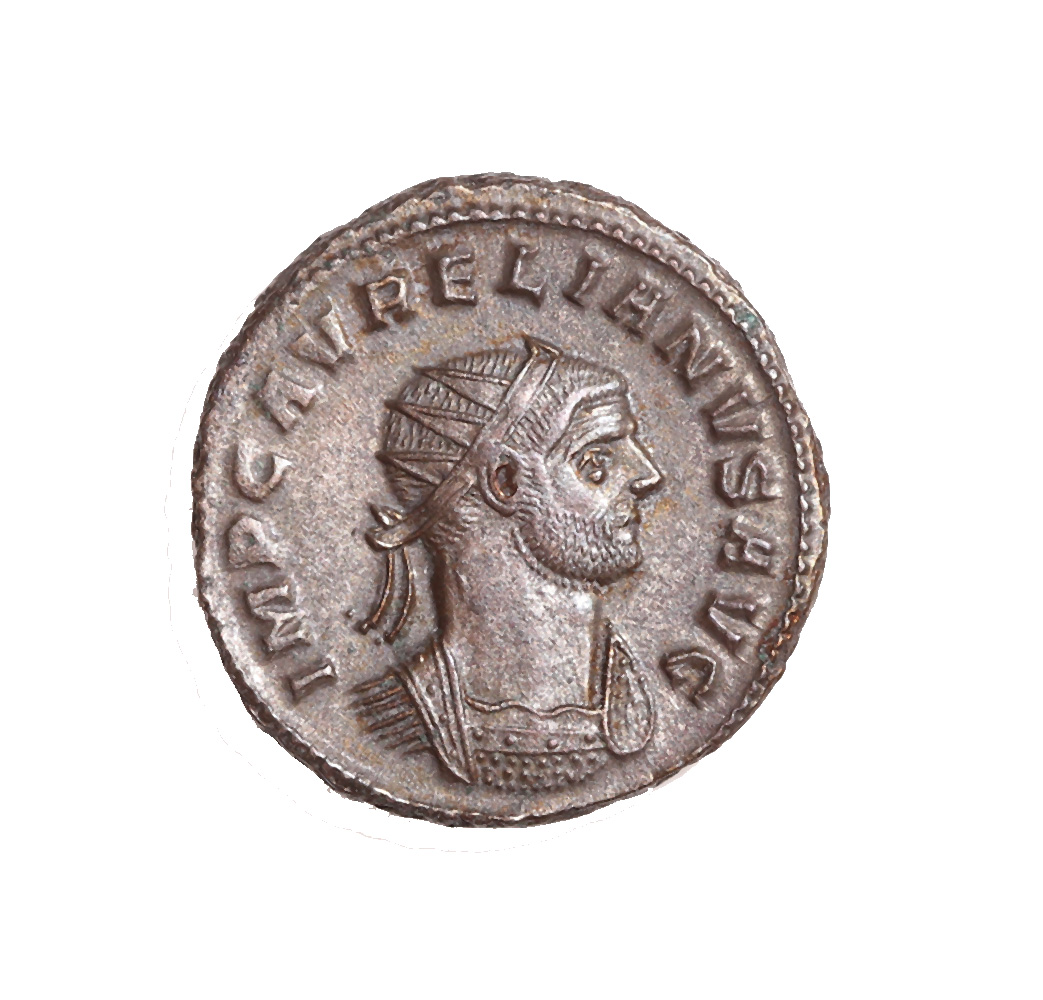
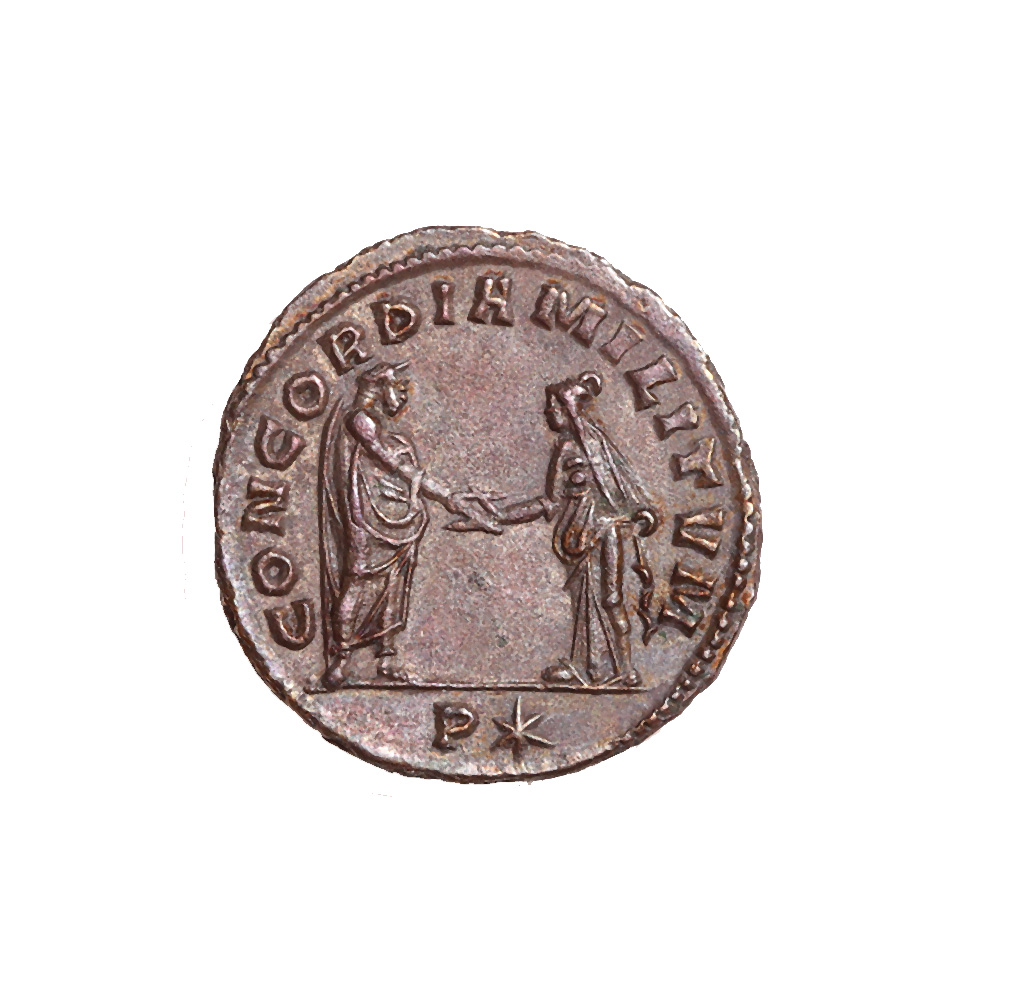
Roman Empire AE Antoninianus Aurelian 274 A.D. RIC-54 Concordia UNC
| Qty | Wire/Check | Bitcoin | CC/Paypal |
| Any | $175.00 | $176.75 | $182.00 |
The Roman Empire AE Antoninianus of Aurelian, struck in 274 A.D. and catalogued as RIC-54, is a striking example of the military, economic, and ideological revival that defined the reign of one of Rome’s most dynamic third-century emperors. This coin, featuring the reverse image of Concordia, reflects Aurelian’s efforts to reunify and stabilize an empire fractured by civil wars, foreign invasions, and monetary collapse. By the time of its minting, Aurelian had achieved monumental victories—reconquering the breakaway Gallic and Palmyrene Empires—and earned the title “Restitutor Orbis,” or “Restorer of the World.” The Antoninianus, originally introduced as a silver denomination by Caracalla, had by Aurelian’s time become a bronze-based coin with minimal silver wash. However, Aurelian’s monetary reforms in 274 sought to restore both its integrity and public trust, resulting in coins that combined improved artistic quality with clear imperial symbolism. This particular example, preserved in Uncirculated (UNC) condition, offers a glimpse into a moment of rare stability and confidence in an age of crisis.
The obverse of the Antoninianus bears a powerful and lifelike portrait of Emperor Aurelian facing right, radiate and cuirassed, exuding both martial vigor and divine authority. The radiate crown, emblematic of Sol Invictus (the Unconquered Sun), signifies the emperor’s semi-divine status and connection to celestial power—a prominent theme throughout Aurelian’s coinage. His strong, chiseled features, intense gaze, and firmly set jaw reflect his reputation as a disciplined soldier-emperor who rose from humble origins to imperial command through sheer determination and skill. The obverse legend reads “IMP AVRELIANVS AVG,” an abbreviation for “Imperator Aurelianus Augustus,” declaring his supreme military and civil authority. The craftsmanship of this portrait demonstrates the improved engraving standards of the reformed mint system, with careful attention to anatomical realism and imperial grandeur. Every detail, from the finely tooled radiate spikes to the sharp outline of the armor, projects an image of strength and competence, mirroring the emperor’s revitalization of Roman government and the army.
The reverse of the coin features the personification of Concordia, the goddess of harmony and unity, standing left and holding a patera (offering bowl) and a cornucopia. The legend “CONCORDIA MILITVM” (“Harmony of the Soldiers”) frames the design, encapsulating Aurelian’s policy of restoring discipline and unity among the legions after years of mutiny and civil conflict. The patera represents religious piety and sacrificial devotion to the gods, while the cornucopia symbolizes abundance and prosperity resulting from imperial harmony. The choice of Concordia as a reverse type is deeply significant: during the third century, the loyalty of the army was paramount, and emperors often invoked this theme to reinforce cohesion between ruler and troops. Under Aurelian, such imagery took on renewed meaning, as his reorganization of the military and strict enforcement of discipline had transformed the once-fragmented army into a formidable and loyal force. The reverse thus communicates not only religious harmony but also political and military stability—key achievements of Aurelian’s reign.
This coin was struck during or shortly after Aurelian’s sweeping monetary reform of 274 A.D., one of the most important fiscal measures of the late empire. Prior to the reform, decades of debasement had rendered the Antoninianus nearly worthless, eroding public confidence and destabilizing the economy. Aurelian addressed this by standardizing the weight, purity, and design of the coinage. The newly reformed Antoninianus, commonly known as the “aurelianianus” by modern numismatists, was struck in a billon alloy containing roughly 5% silver, often coated with a thin silver wash to restore its lustrous appearance. The coins were marked with the denomination “XXI” or “KA” (in Greek), denoting a ratio of 20 parts copper to 1 part silver—an early form of transparency intended to assure users of the coin’s fixed value. These reforms were accompanied by the introduction of tighter mint controls and the suppression of corruption within the minting bureaucracy, measures that revitalized the Roman monetary system and laid the groundwork for later emperors’ fiscal stability.
The mint attribution for this RIC-54 issue is generally assigned to Rome, one of the principal centers of Aurelian’s reformed coinage network, though other imperial mints such as Siscia or Serdica also produced similar types. The coins of this period exhibit superior craftsmanship compared to earlier third-century issues, reflecting the emperor’s commitment to restoring not only economic integrity but also artistic excellence. The flans are well-prepared, the legends cleanly inscribed, and the strikes strong and even—testimony to the disciplined oversight of the restructured mint system. The average weight of these Antoniniani was around 3.7 to 4 grams, and the diameter typically ranged from 21 to 23 millimeters, allowing ample space for bold portraiture and well-proportioned reverse designs. The combination of improved metallic composition and refined engraving made the reformed coins of Aurelian stand out as symbols of renewal and strength across the empire.
The mintage of Aurelian’s reformed Antoniniani was extensive, as the emperor sought to replace the depreciated earlier coinage with a reliable and uniform standard. His victory over Zenobia of Palmyra and Tetricus of Gaul had reunited the empire, and the reintroduction of stable currency was both a practical and symbolic act of restoration. Coins like this one circulated widely throughout the provinces, used to pay soldiers, officials, and merchants, and to reestablish economic confidence. The theme of Concordia—whether referring to the army, the empire, or divine harmony—was particularly appropriate for this moment in history, when unity was both a political necessity and a divine mandate. Each piece, bearing Aurelian’s commanding image and messages of stability, served as a tangible declaration of the emperor’s success in healing the fractured empire and reasserting Rome’s supremacy.
The condition of this particular specimen, graded Uncirculated (UNC), is truly exceptional for an Antoninianus of the third century. The obverse portrait of Aurelian remains fully struck, with crisp definition in the facial features, radiate crown, and cuirass. The fields are smooth and free of wear, preserving traces of the original silver wash that once gave the coin a brilliant sheen. The reverse image of Concordia is equally sharp, with every line of her drapery and each attribute—the patera and cornucopia—clearly visible. The legend “CONCORDIA MILITVM” is bold and complete, struck with precise alignment and even spacing. The surfaces exhibit a natural bronze-golden tone with subtle silvery highlights, the result of light toning over the centuries. The rims are intact, and the strike is perfectly centered, showing none of the irregularities often seen in earlier or provincial issues. In this state, the coin appears almost as it did when it left the dies—an extraordinary survivor from a time of monumental reform and renewal.
Historically, the Antoninianus RIC-54 serves as a powerful testament to Aurelian’s achievements as both conqueror and reformer. His reign (270–275 A.D.) marked a turning point in the third-century crisis—a period when the empire, plagued by usurpers and invasions, teetered on the brink of collapse. Aurelian’s military campaigns restored Rome’s territorial unity, while his administrative reforms reestablished central control. His devotion to the cult of Sol Invictus, expressed on many of his coins, symbolized a unifying divine force under which the empire could find renewed purpose. The Concordia reverse on this issue complements that solar ideology, representing not only cosmic order but also the earthly harmony Aurelian sought to restore among his people and army. It reflects an emperor who understood the power of imagery—one who wielded coinage as a means of communication and reassurance across the vast reaches of the Roman world.
From a numismatic standpoint, the AE Antoninianus of Aurelian (RIC-54 “Concordia Militum”) stands as one of the most historically and aesthetically significant products of Rome’s monetary revival. Its bold portraiture, balanced composition, and symbolic potency make it a favorite among collectors and historians alike. The coin captures the essence of Aurelian’s legacy as a restorer—of the army, the currency, and the empire itself. In Uncirculated condition, it retains all the sharpness and luster that defined the new standard of his reformed coinage, offering a direct link to one of antiquity’s most decisive and transformative rulers. This coin, gleaming with the authority of both emperor and empire, endures as a timeless emblem of renewal and harmony—a bronze and silver testament to the enduring spirit of Rome reborn under Aurelian’s steadfast hand.


