
- home
- Cents
- Lincoln Cents
- Uncirculated and Proof Lincoln Cent Rolls
- Uncirculated Lincoln Cent Roll 1950-D

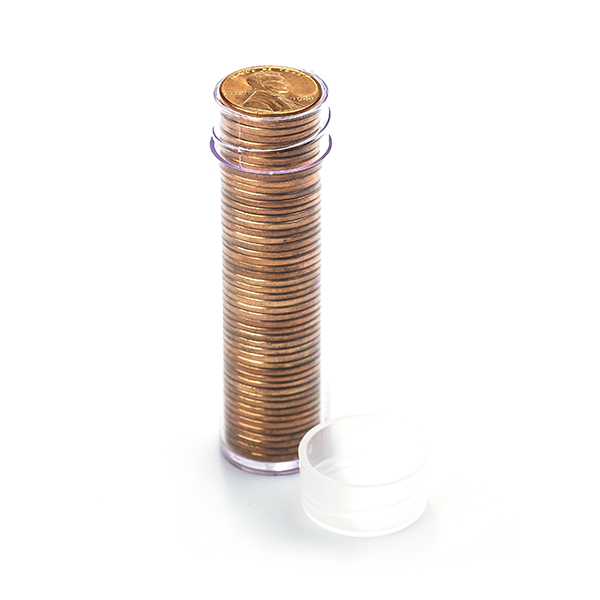
Uncirculated Lincoln Cent Roll 1950-D
| Qty | Wire/Check | Bitcoin | CC/Paypal |
| Any | $44.40 | $44.84 | $46.18 |
The 1950-D Lincoln Cent Roll is a highly desirable collectible from the long-running Wheat cent series, representing both the artistry of Victor David Brenner’s design and the strong production quality of the Denver Mint. By 1950, the Lincoln Cent had been in circulation for more than four decades and had become a staple of American commerce. Unlike the wartime cents of the early 1940s, the 1950-D was struck entirely from newly mined copper, reflecting America’s return to normalcy and prosperity after World War II. Preserved in uncirculated rolls, these coins remain a tangible reminder of post-war optimism and the strength of U.S. coinage during a time of growth and change.
The obverse of the 1950-D cent showcases Brenner’s enduring portrait of Abraham Lincoln, a design introduced in 1909 that remains in use today. Above the bust appears the motto “IN GOD WE TRUST,” while the word “LIBERTY” is positioned to the left. The date “1950” sits to the right of the portrait, with a small “D” mintmark below it to signify the Denver Mint. The reverse features the classic Wheat Ears motif, with two stalks curving inward to frame the inscriptions “ONE CENT” and “UNITED STATES OF AMERICA,” while the national motto “E PLURIBUS UNUM” stretches across the top. By 1950, the design had become an American icon, combining agricultural imagery with Lincoln’s likeness to create one of the most familiar coins in circulation.
The composition of the 1950-D cent followed the post-war standard of 95% copper and 5% zinc. Tin, once part of the bronze alloy before the war, was permanently omitted in 1944. Freshly struck coins gleamed with fiery red brilliance, though over the decades most have toned into shades of red-brown or brown. In uncirculated rolls, collectors may find a range of surfaces, from brilliant red coins with full mint luster to attractively toned examples that display hues of gold, violet, or blue. Rolls with a high percentage of red coins are the most sought after, as these examples are much scarcer and command premiums in the marketplace.
Mintage totals for the 1950-D Lincoln Cent were impressive, reflecting both the Denver Mint’s capacity and the nation’s growing demand for coinage. A total of 334,950,000 coins were struck at Denver that year, a figure larger than the outputs of both Philadelphia and San Francisco combined. These coins entered circulation in massive numbers and remained plentiful in pocket change for decades. However, intact uncirculated rolls are far less common, as most were dispersed into circulation or broken apart for individual sales. Today, surviving rolls are considered numismatic treasures, preserving fifty examples in pristine Mint State condition.
Coins found in uncirculated 1950-D rolls are generally well struck, as Denver Mint issues of this era are known for sharp detail and bold design elements. Lincoln’s cheek and jawline are prominent, his hair curls are well defined, and the wheat stalks on the reverse show crisp, fine lines. The rims are full and sharp, and Brenner’s initials “VDB” are clear at the base of Lincoln’s shoulder. Rolls that have been stored carefully often contain coins with frosty mint luster, while some may also exhibit vibrant natural toning that adds individuality and appeal. Collectors especially value examples that remain brilliant red with minimal spotting or blemishes.
The condition of the roll is a major factor in its desirability. Copper is highly reactive, and coins exposed to moisture or poor storage conditions may develop carbon spots, streaks, or dull surfaces. Rolls kept in original bank wrappers or stable environments, however, often yield coins with blazing red luster and clean surfaces. Such coins are highly prized by collectors seeking pieces suitable for certification at Mint State 65 or higher. High-grade survivors, especially those graded MS66 or MS67, are particularly desirable for inclusion in registry sets and command strong premiums at auction.
The historical significance of the 1950-D Lincoln Cent lies in its role as part of America’s post-war coinage system. These coins circulated during a period of prosperity, when the U.S. economy was expanding rapidly and consumer confidence was high. They were everyday tools of commerce, yet today they serve as artifacts of a nation entering the modern era. For collectors, a roll of uncirculated 1950-D cents preserves this legacy, offering a time capsule of coins struck during one of the most optimistic decades in American history.
Collectors of uncirculated rolls also enjoy the opportunities they provide for variety hunting. The 1950-D is known for repunched mintmark (RPM) varieties, which can add significant value to individual coins. Searching an untouched roll offers fifty chances to uncover such anomalies, making it an exciting pursuit for specialists. Even without varieties, the subtle differences in strike quality, luster, and toning across a roll provide an engaging collecting experience and deepen appreciation for the series.
While circulated 1950-D cents remain common due to the large mintage, intact uncirculated rolls are scarce and highly desirable. Their visual impact is striking, with fifty brilliant bronze coins aligned in perfect Mint State condition, creating an impressive display of uniformity and historical preservation. Rolls appeal to both advanced collectors seeking grading candidates and those who appreciate the authenticity of an untouched group of coins preserved as originally issued.
In conclusion, an uncirculated roll of 1950-D Lincoln Cents is far more than just a set of fifty coins. It is a preserved artifact of mid-century America, capturing both Brenner’s timeless design and the optimism of the post-war period. With sharp strikes, brilliant luster, and the potential for high-grade survivors, the 1950-D roll is a valuable addition to any Lincoln Wheat cent collection. For enthusiasts, it represents both a numismatic treasure and a tangible link to an era of prosperity and progress, ensuring its place as one of the most meaningful collectibles from the Wheat cent series.


