
- Back to:
- Great Britain World Coins


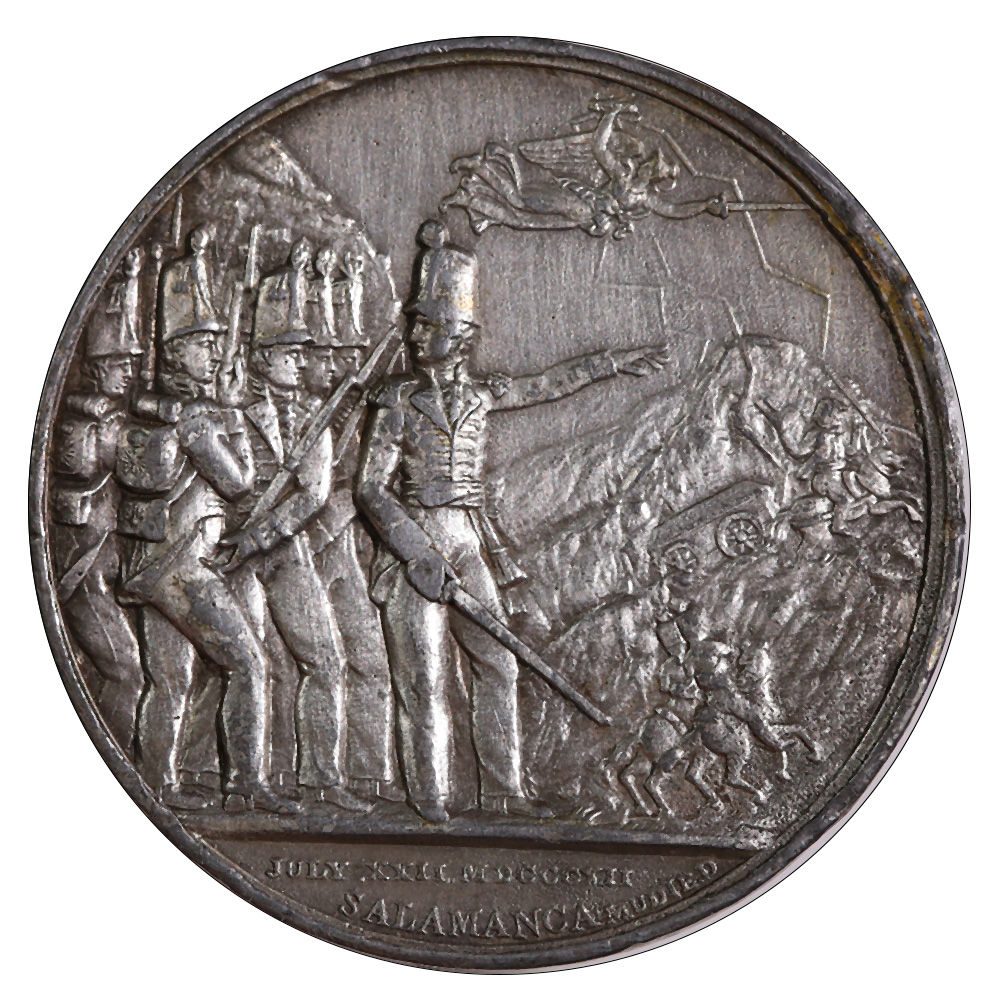
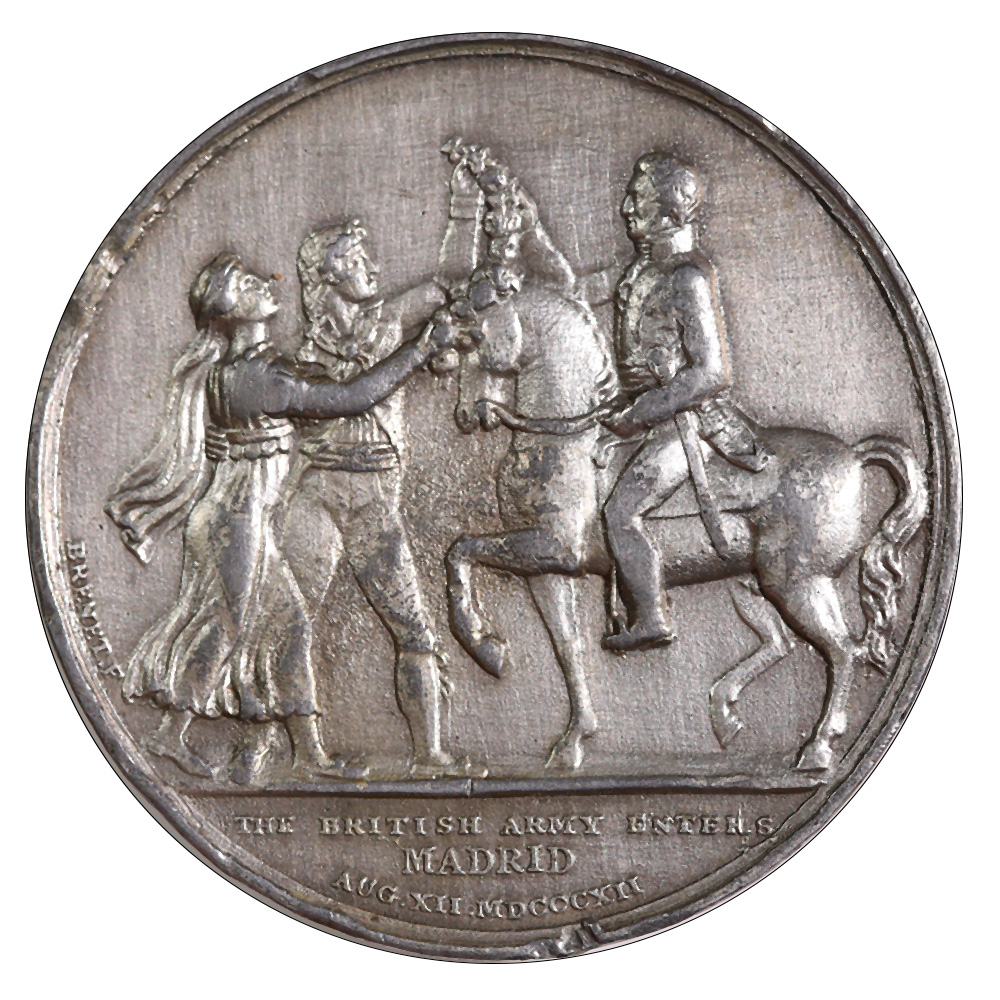
Great Britain Medal Battle of Salamanca 1812 40mm
| Qty | Wire/Check | Bitcoin | CC/Paypal |
| Any | $195.00 | $196.95 | $202.80 |
The Great Britain Medal Battle of Salamanca 1812 40mm is a distinguished historical and commemorative piece struck to celebrate one of the pivotal British victories of the Peninsular War, a crucial campaign in the Napoleonic Wars. This medal, measuring approximately 40 millimeters in diameter, was issued to commemorate the Battle of Salamanca, fought on July 22, 1812, near the city of Salamanca in western Spain. In that battle, the Duke of Wellington’s Anglo-Portuguese forces decisively defeated the French army commanded by Marshal Auguste Marmont. The victory broke French control over much of Spain and marked a turning point in the struggle to liberate the Iberian Peninsula from Napoleon’s rule. The medal’s classical artistry and fine engraving reflect the British tradition of heroic commemoration, as well as the early nineteenth century’s fascination with military glory, discipline, and national pride.
The obverse of the Battle of Salamanca medal features an expressive bust of Arthur Wellesley, the Duke of Wellington, facing right. He is shown in military uniform, often with the high collar and epaulettes characteristic of his rank, his hair rendered in neoclassical detail. Around the periphery appears the legend “ARTHUR DUKE OF WELLINGTON,” identifying the commander who would later become one of Britain’s most celebrated heroes. The portrait’s design adheres to the restrained but noble style of early nineteenth-century medallic portraiture, which emphasized moral strength and composure rather than flamboyance. The finely executed relief captures Wellington’s determined gaze and calm confidence, qualities that became emblematic of his leadership throughout the Peninsular and Waterloo campaigns.
The reverse design presents a masterful allegorical scene commemorating the British triumph at Salamanca. At its center stands Victory, the winged goddess, holding a laurel wreath in her outstretched hand—a symbol of military success—and a palm branch in the other, representing peace earned through valor. At her feet may rest captured French standards, cannons, and drums, symbolizing the spoils of victory. Around the upper edge typically appears the inscription “BATTLE OF SALAMANCA,” with the date “JULY 22 1812” below or in the exergue. The reverse’s classical imagery aligns with the aesthetic conventions of early nineteenth-century military medals, drawing upon ancient Roman symbolism to link British achievement with timeless ideals of courage and triumph. The overall composition conveys grace and balance, transforming the violence of battle into an enduring image of national glory.
The medal’s design is attributed to one of the leading engravers of the Royal Mint during the period, likely Thomas Wyon Jr. or one of his contemporaries, whose artistry defined British medallic production in the early 1800s. The craftsmanship is exceptional, with crisp relief, careful lettering, and harmonious proportions. Struck in bronze, and occasionally in silver for presentation purposes, the 40mm medal exhibits a fine balance between artistic expression and historical documentation. The surfaces display the smooth texture and deep modeling characteristic of Mint production, underscoring the high standards of engraving that were hallmarks of the Royal Mint’s early nineteenth-century output.
The historical context of the medal enhances its importance. The Battle of Salamanca was one of the defining victories of the Peninsular War (1808–1814), fought by Britain, Portugal, and Spain against Napoleonic France. Wellington’s forces achieved a masterful tactical victory by exploiting a gap in the French line as Marshal Marmont attempted to outflank the British army. The engagement resulted in heavy French losses—over 7,000 casualties and 20 artillery pieces captured—and forced the French to abandon Madrid. This victory not only restored morale among the allied armies but also elevated Wellington’s reputation throughout Europe. The medal thus commemorates both a military achievement and the strategic genius that helped turn the tide of the war in Britain’s favor.
Medals celebrating the Peninsular War were part of a broader effort to memorialize British victories during the Napoleonic era. The Royal Mint and private engravers produced numerous commemorative pieces between 1810 and 1820, honoring specific battles such as Talavera, Vittoria, and Waterloo. These medals were often distributed to officers, government officials, and patriotic subscribers, serving as tangible symbols of national pride. While the Battle of Salamanca medal is considered a commemorative issue rather than an official campaign decoration, it holds immense historical value as part of the narrative of Britain’s military heritage. The large 40mm format allowed engravers to include rich detail, making the piece both an artistic and educational object.
The mintage of the 1812 Salamanca medal is relatively limited compared to later military awards, as it was produced primarily for collectors and presentation rather than mass distribution. Bronze was the standard metal for most examples, though a small number were struck in silver or gilt bronze for special recipients. These medals were often housed in leather or wooden presentation cases, sometimes accompanied by printed descriptions of the battle and the Duke of Wellington’s role. Because of their age and limited circulation, surviving specimens are prized by collectors of British and Napoleonic memorabilia. Each medal serves as a physical link to a defining episode in Britain’s military past.
In terms of condition, examples of the Battle of Salamanca medal are typically found in grades ranging from Very Fine to Extremely Fine, though well-preserved pieces display crisp relief and attractive patina. The bronze surfaces develop a rich, dark tone over time, often with golden or reddish highlights accentuating the portrait and the figure of Victory. Edge nicks, small rim marks, and minor handling wear are common due to age, but specimens that retain smooth fields and sharp detail are particularly desirable. Silver examples, when encountered, exhibit beautiful toning in shades of blue and gold, adding to their aesthetic appeal. Collectors value medals with clear legends, uncleaned surfaces, and original luster, as these retain the authenticity and integrity of the original striking.
The artistry of the Battle of Salamanca medal exemplifies the neoclassical revival that influenced early nineteenth-century medal design. The use of allegorical figures like Victory and the classical rendering of military themes reflect a cultural movement that sought to align modern British valor with the heroism of antiquity. The clean composition and balanced proportions show the engraver’s mastery of form and symbolism, transforming a specific military event into a universal representation of courage and leadership. This approach helped elevate the British commemorative medal to a respected art form, admired throughout Europe for its beauty and dignity.
Today, the Great Britain Medal Battle of Salamanca 1812 40mm stands as a cherished relic of both artistic and historical importance. It captures a moment when Britain, through determination and leadership, began to reverse Napoleon’s dominance in Europe. More than a token of victory, it is a symbol of the nation’s resilience and unity during one of the most turbulent eras in its history. Collectors, historians, and enthusiasts continue to admire it not only for its fine engraving and elegant form but also for its enduring narrative of valor and freedom. In every sense, this medal remains a timeless tribute to Wellington’s triumph and to the British spirit of perseverance in the face of formidable odds.


